Skip to content
GrimValor Poster Third

Why GrimValor Deserves a Remake (Part 3: Narrative) [Beyond Continuity]

Tris Strudel
Tris Strudel

Worldbuilding Drip-fed through a Crack in the Wall

At first glance, GrimValor is little more than a Dark Souls game dressed up like a Metroidvania.  And I can’t shame anyone who looks for lore and still finds the narrative content lacking.  Because it is lacking, from the characters you interact with, the bosses you encounter, and the history of the kingdom Vallaris.
In part 1, I gave an introduction to this game and discussed its gameplay.
In part 2, I covered the environments and level structure.

In this third and final entry, I’ll be going over the narrative of GrimValor, including the good and what could be improved in a hypothetical remake.

The Story as We Know It

Let’s talk about the story directly before we start covering individual characters.

The Introduction
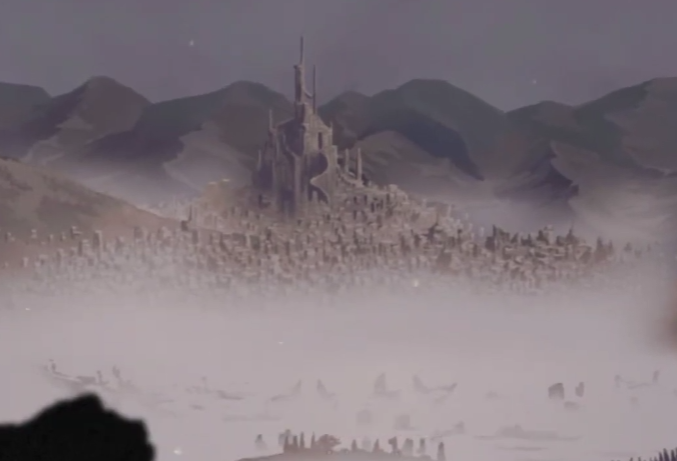
Vallaris Screenshot

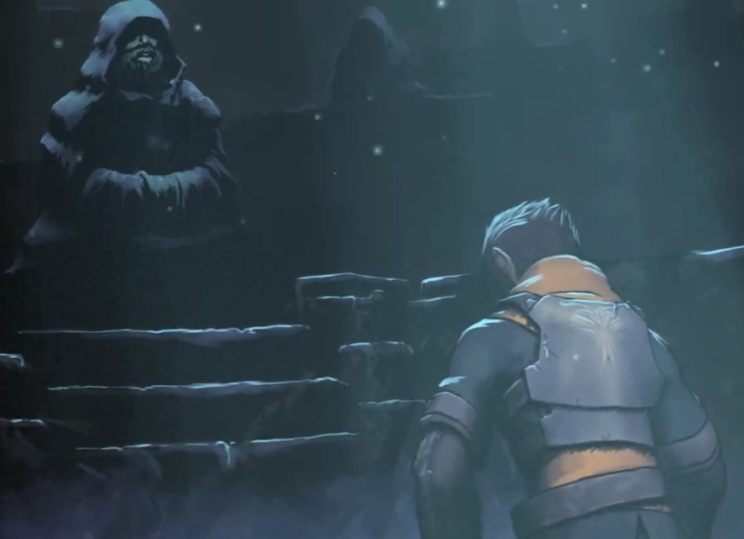
The game opens with the protagonist arriving in Vallaris and encountering some weak monsters.  Then they meet The Slayer, a mysterious warrior with a horned helm and a massive sword.  Most players will lose to the Slayer, but regardless of the fight’s outcome, a portal appears, taking the character to a hub world called The Nexus.  It’s here that the game’s title is dropped, leading into a narrated cutscene.

Vallaris Screenshot

“The lost kingdom of Vallaris… consumed by its own ambition, and its people turned into monstrosities.  Sealed off and separated from the outside world, it was forgotten for generations.  But then cursed abominations began appearing outside its borders.”

Vallaris Screenshot

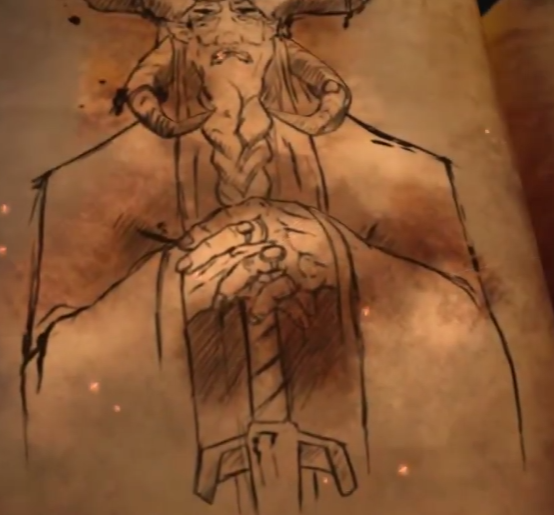
“On royal orders, numerous scouts were dispatched to investigate the cause, and among them a warrior with a mission to discover the fate of the lost king of Vallaris: King Valor, under whose rule the land was lost.”
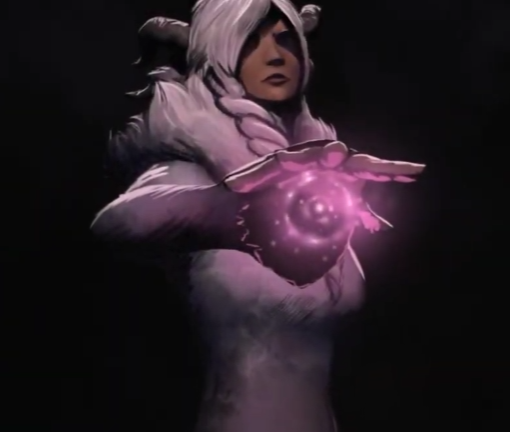
Vallaris Screenshot

“Most of the scouts found their demise at the hands of the roaming monstrosities.  The rest vanished without a trace, and their fates remain unknown.”


This is a strong opening.  The player is given a clear understanding of their motivation and the threats they’ll face.  We know an ancient kingdom was corrupted, then sealed away.  Its king was responsible for the corruption.  The monsters inside the kingdom are slipping into the rest of the world.  And we’re here to find answers, presumably in order to stop the corruption.

The game shows good visual storytelling as well.  If the Slayer defeats the protagonist at the start, they don’t kill you.  They throw you into the portal.  And in the narrated cutscene, what do we see as the protagonist goes through the portal?  A woman in white, with goat-like horns, using some kind of magic.  Not only does the woman show similarities to the illustration of King Valor, but her visual fades in as the narration talks about those whose fates remain unknown.

Some things are left ambiguous.  We don’t know the name of the faction we belong to.  We’re simply led to believe the protagonist serves some government in the outside world that wants to stop the monsters.  And nothing in the game ever challenges this.  And we’re not told how long Vallaris has been lost.  We’re simply told it’s been generations.

A generation is often treated as between 20 and 30 years.  It would be reasonable to assume a soft minimum of one century has passed since Vallaris was sealed away.

Not knowing the answers to these specific questions doesn’t make the game harder to understand.  At the same time, a remake could fill in these gaps to make the setting feel more lived-in and real.  It could spend a bit more time explaining how Vallaris was sealed away.  Was it through magic, or were massive walls built?  Do guards patrol the borders?  

The faction our protagonist belongs to could get a name, and there could even be more information dropped about what the rest of the world thinks of Vallaris.  We’re specifically told our character is there to scout rather than destroy.  A part of the narration could talk about how some factions sent armies to destroy Vallaris entirely, only to be wiped out.  It could mention how others seek to take the corrupting power for themselves, and our character was sent to find a solution to the corruption before the more ambitious groups reach the source.

I should reiterate that the opening does not need these additions.  While the rest of the game is far weaker on the lore side, what we start with is engaging and leaves the player wanting to know more.  But that’s not to imply you can’t improve upon the foundation.

With most of the suggestions I bring up, you’ll find that the goal is to enhance and add to what already exists rather than replace or remove.  GrimValor’s story has a solid foundation.  It just unfortunately also has a lot of empty space.

The Main Events

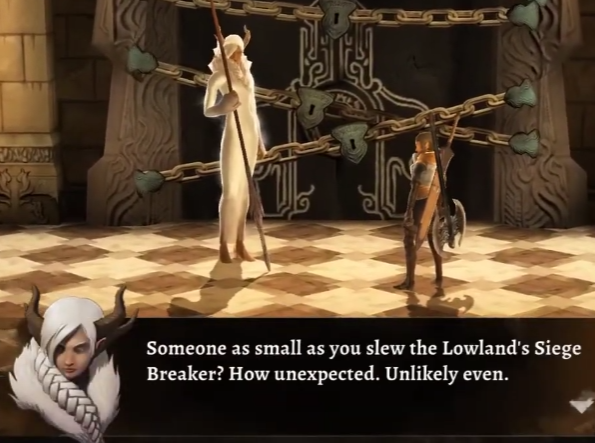
In terms of overall narrative, very little happens for the majority of GrimValor.  In your first visit to the Nexus, you encounter a fragmented piece of a mirror-like construct called the Nexus Gate.  Restoring it to the frame it belongs to stabilizes that Nexus hub.  And it isn’t long after that you encounter the tall woman in white from the narration.
Alyssia Screenshot

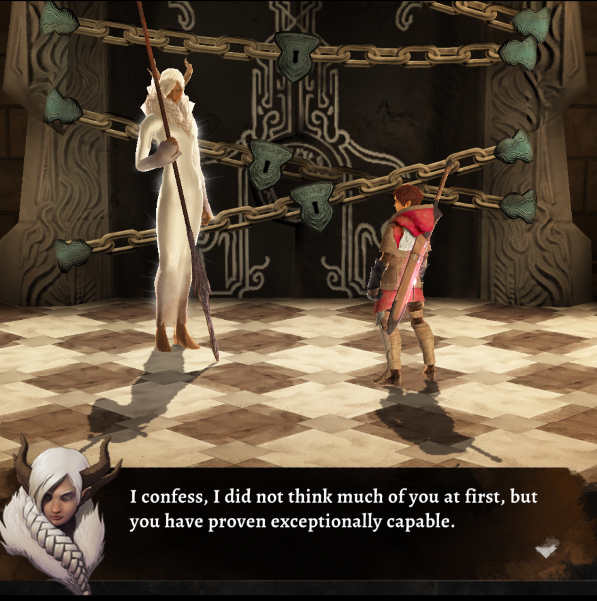
This is Alyssia, and I have a lot to say about her.  But we’ll save that for the character section.  For most of the game, you’re not told directly who Alyssia is.  She’s clearly someone of importance, and she directs you to your goal by telling you where to find the other fragments.  Once all the fragments are collected, you can face the semi-final boss, take an artifact from its area, and unlock the path to King Valor.

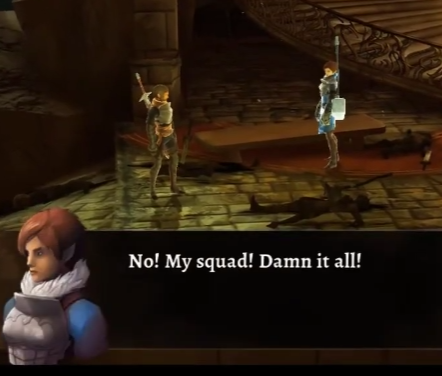
I should clarify that while main story content is minimal during most of the game, there are still plot points throughout.  Regularly, you’ll encounter this lone warrior belonging to your faction (the sex of this character is different depending on which protagonist you choose).  Their team was slaughtered by the monsters, with them as the lone survivor.  Unfortunately, they are not nearly as capable as you and often end up in peril, which the protagonist has to save them from.
Comrade Screenshot

Luckily, this Comrade isn’t an obstacle in the story.  You don’t have to babysit them.  Most of the time, you simply encounter them, they'll say a few words, and then you’ll be off again.  But they contribute very little to the story.
Merchant Screenshot

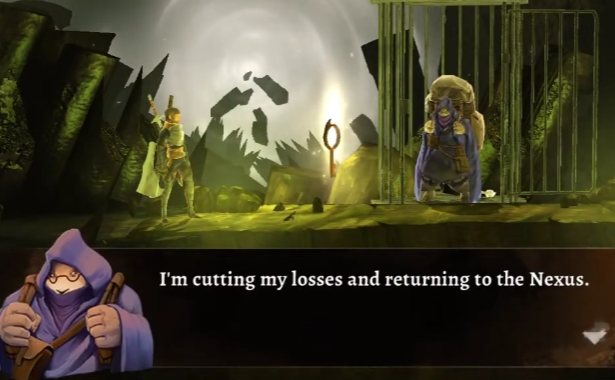
Another consistent NPC is The Merchant, who has the most unique appearance of the characters due to him being some kind of anthropomorphic animal (a mouse or rabbit, I think).  You find him trapped in the first act, and after freeing him, he resides in the Nexus to trade with you.

A nice bit of flavor for each act is that Alyssia (and sometimes the Comrade) has lore to share about some of the bosses, starting with Act 2 (when you officially meet her).  She first talks about Williard the Ogre, who was a great protector before his corruption.  She doesn’t express much empathy toward Williard, but she doesn’t revel in his inevitable demise either.  She simply charges you to slay him for the good of the world.

When sent to deal with the Silver Dragon Nelaag, she suggests that because the creature “holds no love” for King Valor, it may be possible to reason with it without violence.  Nelaag itself is an interesting twist because you never actually fight the dragon.  The Slayer kills it before you arrive before challenging the protagonist to be certain they are strong enough to face King Valor.

When preparing to face the second-to-last boss, Archmage Cromwell, Alyssia is empathetic toward him, encouraging the protagonist to put him out of his misery.

The game shows a bit of narrative flare with how certain enemies are introduced.  The dragon-like monsters are the final corruption phase for Vallaris’ inhabitants.  You first encounter them in a lower area of Act 1 when they’re significantly stronger than the protagonist.  And then they show up in Act 2 to attack the main boss.  Later on, they start appearing and demonstrating new abilities, all leading up to the fight with Williard as this larger, draconian ogre creature.

That is some strong storytelling through gameplay, but it’s almost exclusively in Act 2.


I’ll be saving the more in-depth analysis for the character section, but unfortunately, what I’ve listed here is the majority of content you’ll find about each area.  There are some moments during gameplay where the story threatens to flesh itself out more, but the fact that only specific bosses get any lore or opinions expressed about them is a bit shocking given that you have mini-bosses, main bosses, and hunters throughout.

I don’t expect Alyssia to handle all the exposition.  Unfortunately, the Merchant has almost nothing to say about any environment or character beyond general statements like pointing out the weather or his stance on books.  And the most interesting input the Comrade has is bringing up how the Slayer defeated him and imprisoned him rather than killing him.  He’ll still provide you a few bits of trivia–talking about vaults with treasure, for instance–but most of his dialogue is repetitive and overall unimportant.

The game has two other NPCs which could have easily provided further insight into the monsters and people who became monsters.  The first is that out-of-place slime which just spouts out numbers.  But the second is a far more interesting mage.

GrimValor Screenshots

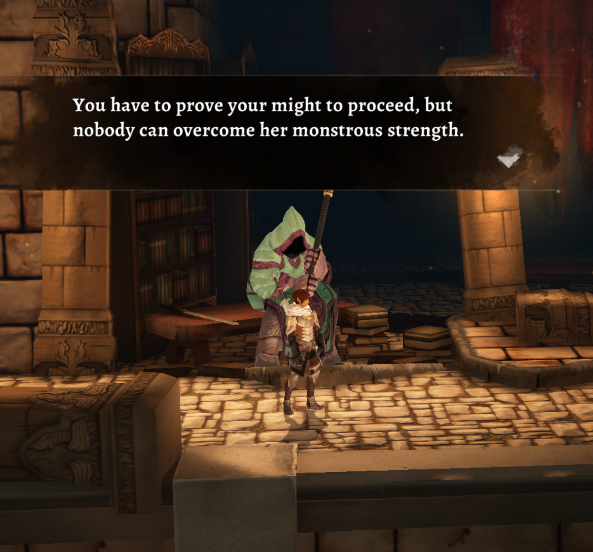
“It’s no use.  You have to prove your might to proceed, but nobody can overcome her monstrous strength.”

The placement of this green-cloaked figure is incredibly fascinating to me.  We won’t see enemies like him until Act 4, and they prove to be powerful mages in their own rights.  This is a strong character by implication, and despite still breathing, he has accepted defeat.

His dialogue is interesting as well and appears to hint at who the final boss will really be.  

… So why is this all we get from this character?  We can’t fight him.  We don’t get any items from him.  He doesn’t appear later.  His dialogue never changes.

I am all for letting the simplicity of the encounter speak for itself.  But when most of the game has nothing else like this, and even the characters you interact with repeatedly have very little lore to offer, it screams, “You can expand on this in the remake,” especially if it means having the other NPCs interacting directly with each other.

The Final Act

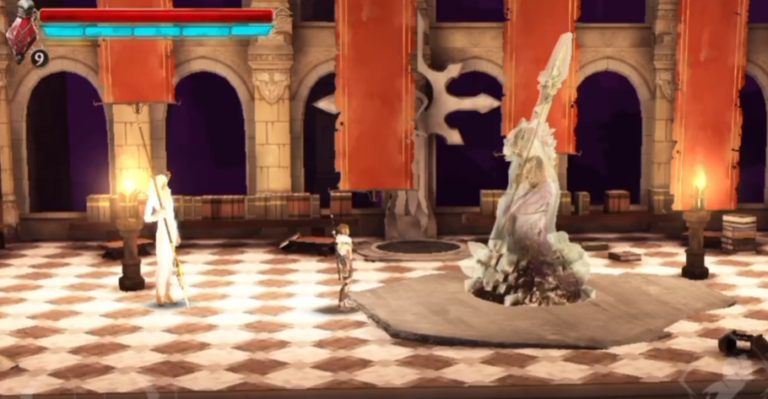
After recovering the staff guarded by Archmage Cromwell, the protagonist opens the chamber beneath the Nexus.  Inside is Alyssia’s true form, frozen in what looks to be crystal.  The Alyssia we’ve been speaking to is simply a magical construct she pilots while trapped.

Alyssia has the protagonist break her prison but almost immediately betrays us.  As it turns out, Alyssia wants to take King Valor’s power for herself.  She seals you in a crystal prison like she suffered and leaves to face King Valor.

It’s shortly after that the Comrade shows up and frees the protagonist, allowing them to go after Alyssia and defeat her.  Once Alyssia is slain, the protagonist approaches king Valor to put an end to the corruption.

King Valor Screenshot

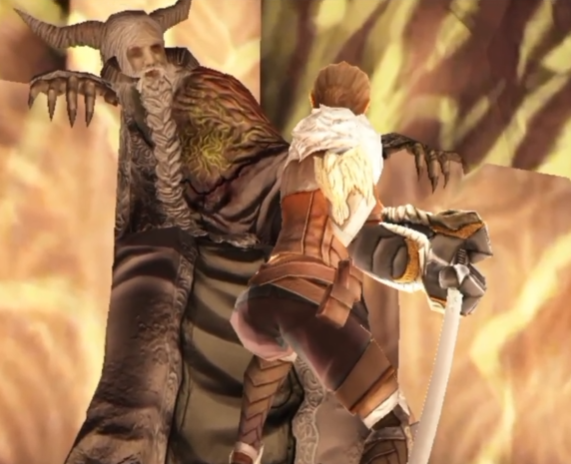
I really like the subtle storytelling in the last moments with King Valor.  Archmage Cromwell was this gigantic, dragon-like creature.  But King Valor looks like a sickly old man.  He sits lopsided on his throne, with corruption veins trailing from his body.  He has corrupted horns and veins, but otherwise, he just looks like this frail, vulnerable person.

The way the protagonist just approaches and kills King Valor without hesitation is a nice touch, and reminded me of the typical Samus Aran behavior from the Metroid series.  But what stood out most is that you can see King Valor open his mouth and charge some kind of energy.  In spite of the agony he must be in, he tries to defend himself.  It speaks to just how power-hungry and selfish he was in the end.


Like most of GrimValor, the ending is perfectly serviceable.  At the same time, it’s incredibly predictable.  I won’t speak to anyone else, but the instant I met Alyssia, I knew she’d betray us.  I don’t fault the game much for that.  It’s hard to conceal a twist villain like that nowadays, especially in games.  But there is a way to improve the twist through player choice.

The hit 2015 indie game Undertale starts with an early-on betrayal scene with its main antagonist, Flowey.  Flowey pretends to be your friend and encourages you to try and catch his “friendliness pellets” when they’re really painful projectiles.  

Undertale lets players avoid the pellets if they’re smart enough, resulting in Flowey losing his cool.  The narrative rewards players for figuring out that he isn’t their friend.

Free Alyssia Screenshot

What if instead of freeing Alyssia, the player could attack her illusion body?  Doing so would alert Alyssia to your suspicions, and perhaps she would congratulate you on your cunning.  As a bonus, you could have a brief mini-boss against the construct of Alyssia but still ultimately break the prison during the fight (perhaps via Alyssia casting an illusion).

When the player fights the Slayer for the first time, they get rewarded with a special weapon if they survive.  Something similar could happen here.  Maybe something in the environment breaks, revealing a special item.  Or you get unique dialogue which bolsters the story.


Beyond Alyssia, the use of the Comrade in freeing the protagonist is pretty pathetic if I’m being honest.  They don’t contribute almost anything to the story, and they’re very weak.  So the fact that they’re able to break the crystal prison Alyssia puts you in is convoluted to me.  And the fact that they don’t say much more than that they don’t like Alyssia very much is a big missed opportunity.

A GrimValor remake could play into the Comrade’s weakness by forcing the player to control them.  Make it so the Comrade has to travel to a particular area of the game (ideally the first act where the powerful dragon enemies were as a callback).  There, they can find a weapon or material strong enough to destroy the crystal prison.  

Have it so the Merchant is more involved and helps forge whatever the item they need is.  Then you can have the Comrade free the protagonist.  It would be a nice way of showing that the Comrade isn’t useless and how they’ve grown.  And it would be a nice way to open the door for a second playable character, perhaps as a hard mode.

The Books

Before we get to the characters in earnest, I want to talk about the main source of lore in the game.
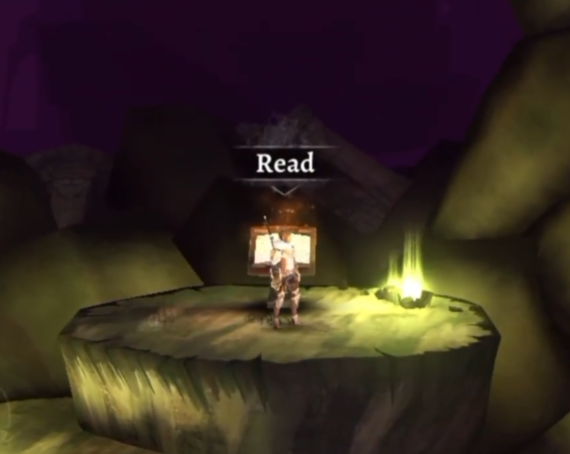
Book Screenshot

These lecterns can be found throughout the game, with 7 in total.  Some are more useful than others.

The first book–The Burning of the Lowlands–talks about the different monsters the outside world scouts encounter in Vallaris: specifically, the Siege Breakers.  They’re described as monstrous threats, requiring great numbers to slay.

While a neat bit of text, this book doesn’t give players much useful information.  You don’t gain any gameplay strategy.  All you’re told is that the siege breakers are deadly.  It acts as a nice bit of preamble, but little else.


The second book–Dragonblood–is far better.  It narrates how King Valor traveled up Sanctuary Mountain to meet with Nelaag for the first time.  Valor blackmailed Nelaag.  “Either the silver dragon would submit to servitude, or all its kin would be annihilated by the blade of the royal Dragonslayer.”  Valor leaves the mountain with a vial of the dragon’s blood, not realizing that he had just sparked the great corruption.

This is a fantastic entry, and it matches what Alyssia told us about Nelaag well.  It’s safe to assume the dragons aren’t benevolent, but this book tells us that not only was King Valor the instigator/aggressor, but he also had the power to wipe out the dragons.  If Nelaag could have defeated Valor, he wouldn’t have agreed to the terms.

This helps characterize King Valor well.  There’s nothing in here about him being desperate during a war.  He just wanted power.  So he subjugated the dragons to get it.


The third book is called The Ogres.  From what I can tell, it talks about the first sighting of the Ogres (the final corruption phase for the people of Vallaris).  It describes how people thought the ogres were just beasts until it became evident from their intelligence that they had once been people.

This is a nice bit of lore in itself.  We know from the start of the game that people were turned into monsters, but this confirms that it isn’t just the zombie-like enemies who were the citizens.  It shows just how extensive and dangerous the corruption was.  And it implies just how tempting it could be to want that power.


The fourth book is The Weaver of Webs.  It describes how the ancient ruins were overrun by mutated spiders (likely from the corruption) and how after sending entire platoons into that area of Vallaris, the scouts decide it isn’t worth fighting.

This is neat, but it doesn’t give much else.  It’s basically a retreading of the ogre book, just with spiders instead.


Book five is Dragons of Vallaris.  This is a companion piece to Dragonblood, as it details the speculated benefits of dragon blood when used on mortals.  It clarifies how King Valor didn’t just travel to meet Nelaag but waged a war against the dragons to get the silver dragon’s blood.  And it grimly finishes by mentioning how King Valor’s actions “turned an entire race into a dangerous enemy that would neither forgive nor forget.”

This gives some good clarity to Valor’s actions and how he acquired the blood in the first place.  But I especially like how it addresses the harm caused.  King Valor didn’t just doom his people to death, but corruption.  And those who remain alive as monsters despise him.


Book six is titled Words of the Archmage.  This haunting piece talks about when the changes were first discovered: watching as peoples’ personalities shifted and the sickness spread.  There’s hope expressed at the end that being aware of the corruption means they can find a way to fight it.  But it’s treated as grim all the same.

While I like reading from those who were there for the corruption, this doesn’t tell the player anything new.  And it hardly describes the changes either.  This is a great opportunity to explain what specific changes happen to who and how.  It could detail how long it takes to go from a normal person to one of the shambling ghouls, and finally an ogre.  It also would be a great chance to explain the armored enemies in Act 4, and whether they are corrupted or not.


The final book is titled Betrayal.  This has very key history for Princess Alyssia.  After finally defeating King Valor, the people of Vallaris were stopped from dealing the final blow by Alyssia.  She wanted to use King Valor’s power herself and turned her magic on her people.  She was defeated and imprisoned, but because of her, King Valor was “out of our reach.”  The people shattered the nexus gate into the fragments we’ve been recovering and resigned themselves to their doom.

This clarifies some things in the story, especially Alyssia’s position.  It’s rather heartbreaking to be so close to ending the corruption only for another in the royal line to betray the people out of powerlust.

One thing I would have liked to know more about in this book is how the monsters started to get out of Vallaris years later.  Something like, “Our prison for Alyssia is weakening” would be fine.


Overall, I’d say about half of these books have useful information.  I’m quite a fan of Dragons of Vallaris, Betrayal, and Dragonblood, but the rest could have done more to flesh out the setting.  It would have been awesome to get more details about the main bosses, who specific figures were and what they were like before the corruption, and even some history about Vallaris before King Valor met with Nelaag.  

Honestly, getting more information about the dragons in general would have helped a lot.  The fact that we only “meet” Nelaag after he’s been slain by the Slayer could have been made especially tragic by knowing more about Nelaag as a person.  Were the dragons evil?  Did they keep to themselves?  Did Nelaag know King Valor would be corrupted?  Who’s to say there won’t be other dragons across the world who could start this same kind of corruption?

The Main Characters

GrimValor has four main characters you as the player will interact with: the Comrade, the Merchant, the Slayer, and Alyssia.  And while Nelaag the Silver Dragon and King Valor are important, this section will focus on the characters you speak with and who provide functions for the game.

I won’t be covering the protagonist due to them being a player-vessel character.  They don’t show any particular agency, so their character could go in many directions.  I’ll simply say that there is certainly room to have the protagonist show more character, but I don’t mind either way if a remake were to include or exclude such content.

Comrade: The Weak Warrior

I’ve been a bit harsh to the Comrade character, but let me be clear, I don’t dislike the character by any means.  It’s more that I’m annoyed at how little the game does with them.

The Comrade is a fellow scout who was part of another platoon sent to find the source of Vallaris’ corruption.  Their team was wiped out by the monsters, and they alone survived.

The Comrade appears throughout the game, sometimes to give crumbs of lore, sometimes in need of saving, and sometimes just being around.  The Comrade isn’t prideful or antagonistic.  In fact, they’re very friendly and supportive.  And in the end, it’s the Comrade who rescues the protagonist from Alyssia’s prison.

The problem is that the Comrade is only really in the story to make it feel slightly lived-in.  Outside of freeing the protagonist at the end, everything they do could be done by other characters.  And they don’t have any strong beliefs or arcs.  They don’t grow stronger.  They don’t become upset at how weak they are.  You can’t fight alongside them against specific bosses.  You can’t trade with them.  You don’t even learn much about them.  

I already talked about how you could make the Comrade playable in the final act.  But beyond that, I think there’s some great potential for a relationship system (not the romantic kind).  Really play into how much they care about their fellow squad members.

Just as an example, let’s say the Comrade asks you to venture into a particularly dangerous area, and you have to do it before you progress to certain other places, making it harder.  Each time this is requested, it’s to save one of the squadmates who was lost.  Maybe each time, you can’t save the squadmates, but you recover something of theirs to bring back to the Comrade.

Have the Comrade get more discouraged as time goes on but be grateful that the protagonist keeps risking their lives to help.  And with the final squadmate, have it that you can rescue them.

You could learn more about the Comrade’s life and their teammates.  And by doing this game-long quest, it could result in the Comrade coming with you to fight Alyssia in the final battle.

This is just one idea, of course.  The Comrade could do plenty of things.  The point would be that they show more agency and influence the game rather than just showing up here and there.

Merchant: The Anomaly

The Merchant is apparently a citizen of Vallaris who remembers what it was like before its corruption (over at LEAST 40 years ago).  We meet the Merchant when he’s trapped in the first act, surrounded by Ogres.  Then we save him, and he becomes our buddy.  He’ll give tiny factoids about different areas and occasionally talk about the weather.  But beyond that, he offers very little.

Considering the only non-humans in this game are hostile monsters, it really makes the Merchant stand out as this animal person.  This guy could have been the perfect source of lore.  I mentioned in part 2 that you should be able to interact with more items in the game to get tiny bits of lore.  What if interacting with different books and artifacts gave you dialogue options with the Merchant?

Imagine if you came across a book with a word you didn’t recognize.  Then the next time you saw the Merchant, he’d say something like, “Oh yes.  I remember when that happened.  Let me tell you.”

Also, how on Earth is the Merchant not corrupted if he’s been here so long?  The game could easily have added more lore lecterns to tell us about the different inhabitants and how they reacted to the corruption.  Maybe the Merchant’s species is immune?  Maybe he is corrupted, but the process is much slower because he takes something for it.  There could even be a questline where the Merchant turns into a monster if you aren’t careful, and you lose access to his shop.

This is where a codex could come in.  The Merchant could be your data storage for all the creatures and areas you go to.  Perhaps one of the upgrades you could buy is writing material.  And the codex itself would give you a bonus every time you got all information on a type of monster and/or area.

At least with the Comrade, we knew he was a fellow scout and human.  The Merchant stands out like a sore thumb because he looks like he jumped straight out of Dust.

Alyssia and The Slayer: The Two-Sided Coin
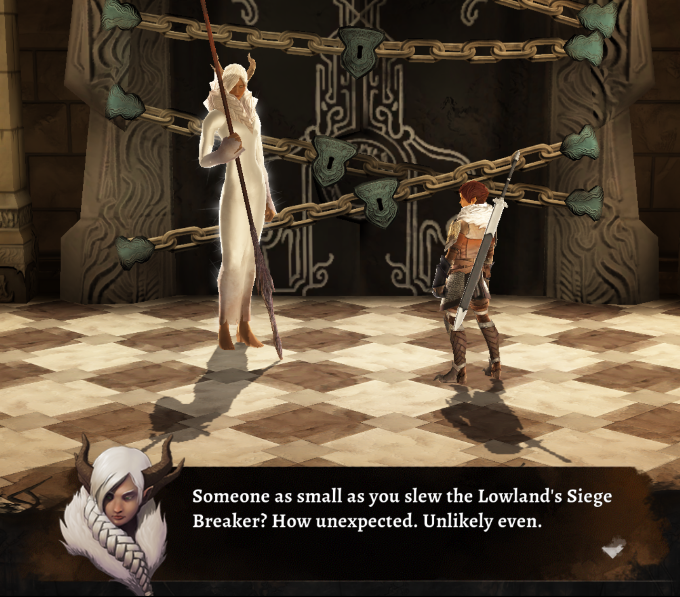
The most interesting character(s) in the game by far was Princess Alyssia.  As much as the villain twist was obvious for me, the writing for Alyssia really stood out to me.  

All that we’re told directly is that Alyssia is the daughter of King Valor.  When the kingdom rebelled against Valor and almost killed him, Alyssia betrayed them so she could take her father’s power.  She was sealed away, and the people were too weak to finish off Valor (seemingly).  

When the protagonist shows up, Alyssia recognizes their strength as an opportunity to free herself and get her father’s power.  So she helps the protagonist only to betray them and ultimately die at their hands.

It would be easy–and likely accurate–to assume Alyssia is strictly deceptive.  Her title is literally “Alyssia: The Deceiver”.

GrimValor Screenshots

Alyssia starts out with honest, but misleading, flattery.  She is surprised by the protagonist’s strength and admits to having doubts about them.  But she uses this to leverage their aid by appealing to their righteous mission and ego.

Then Alyssia has other lines throughout the game which show a lot more dimension.  When she talks about Williard, she says, “Exact justice for the lives lost and retrieve Williard’s treasure, little warrior.”

This line leverages pathos by bringing up those harmed during the corruption.  And it’s almost certainly to manipulate.  But it shows some self-awareness from Alyssia toward those who suffered because of her and her father.

But then Alyssia speaks about how the king’s own guards imprisoned him, lamenting how it must feel to be betrayed that way.  One could easily compare this not just to how Alyssia was herself sealed away but to how she genuinely felt toward her father.

I already mentioned Alyssia’s words for Cromwell, but she also refers to him as an “old fool” for trying to keep the king sealed.  There’s this conflict in her words, showing resentment and pity.  Cromwell became a monster and suffered, but it was in service of protecting the realm.  Meanwhile, Alyssia’s motives are selfish.

After Alyssia betrays you, she says this: “Make no mistake.  I am grateful.  But I believe your morals would instruct you to stand in my way.”  And while it could be interpreted as cruelty, I think Alyssia sealing you away was her attempt at mercy.  Because Alyssia knows what she’s doing is wrong, and she has given into her greed.  But she doesn’t seek to harm the protagonist unless necessary.

All of this isn’t enough to prove Alyssia had real complexity to her.  It’s mainly speculation.  But what if Alyssia wasn’t just one person?


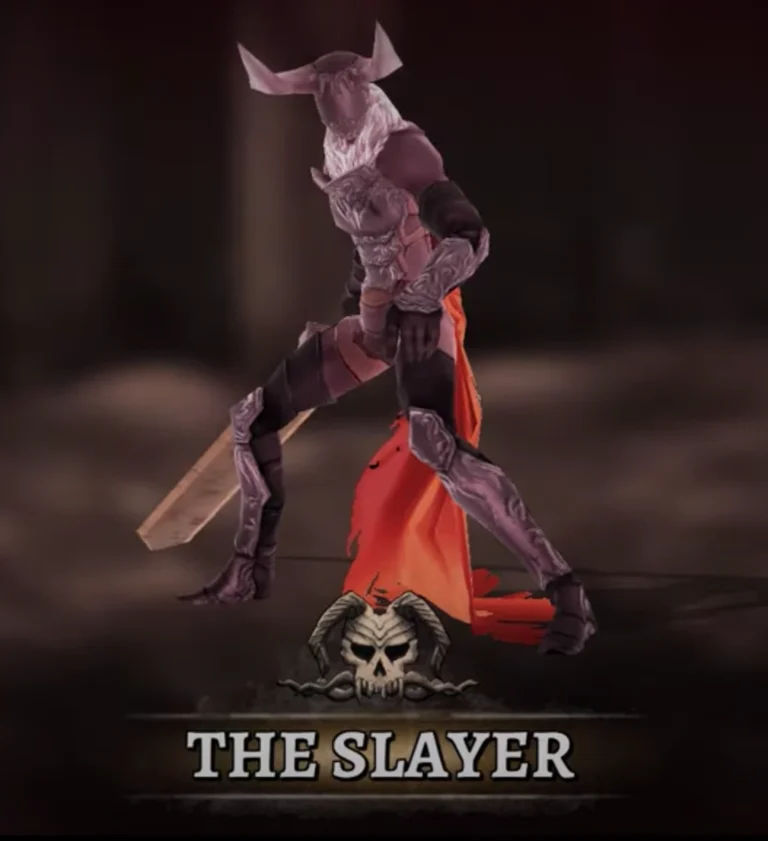
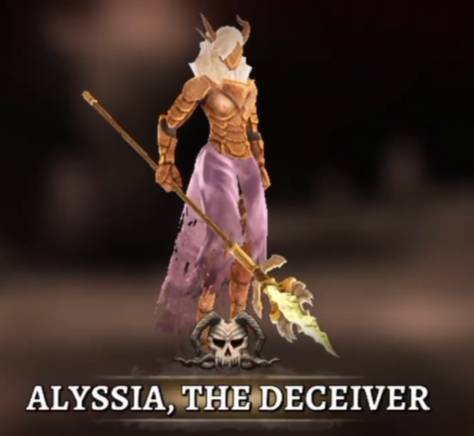
Look at these two designs.

Slayer
Deceiver

While not identical, much of the armor structure, the cloth, and even the furred collar are quite similar.  

It’s the Slayer who challenges you to get stronger throughout the game.  The Slayer kills Nelaag, much to Alyssia’s chagrin.  Alyssia wanted a vial of Nelaag’s blood, but the Slayer makes sure that won’t happen.

The books mention that King Valor had a royal dragon-slayer.  This would have to be someone powerful.  And who is the most powerful character we fight?

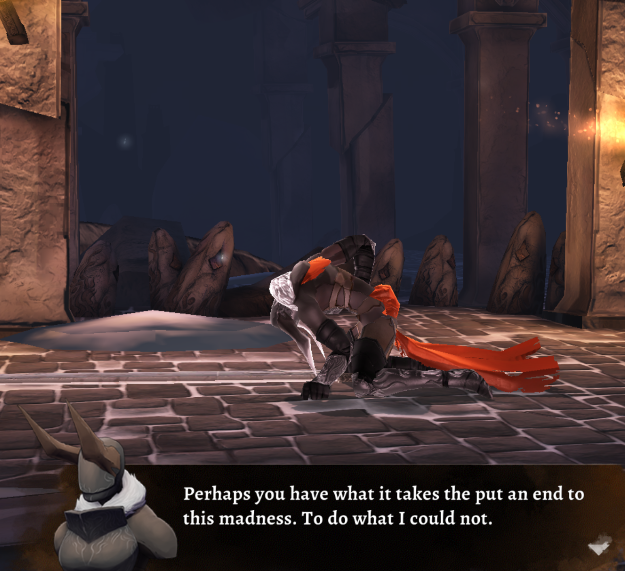
After the final Slayer encounter, they say this: 

GrimValor Screenshots

The Slayer’s final words are, “Stay on your path, don’t falter… but beware…”

It is my strong belief that Alyssia herself is the Royal Dragonslayer.  If I had to guess, I’d say her magic and inner conflict manifested the Slayer construct as a shadow of her former, honorable self.  While Alyssia The Deceiver pretends to help the player in her white facade, Alyssia The Slayer seeks to prepare the protagonist to face her true self.

When the Slayer says that the player can finish what they couldn’t, I believe that’s Alyssia speaking to her fall to temptation.  And the fact that she slays Nelaag reads to me as an attempt at partial redemption.  She cannot defeat King Valor because part of her wants his power.  But she can kill Nelaag to ensure the blood isn’t used again.


So what would I change/add for Alyssia and the Slayer?  Well, I’d make it more clear that they’re the same person, for one.  I wouldn’t have it stated outright, as I feel having to figure it out is a great aspect of the story.  But I’d include hints, like books mentioning some about the royal dragonslayer and any interactions between them and King Valor.

I would definitely include more lore about Alyssia’s actions during the corruption along with before.  I want to know more about their relationship.  Did Alyssia resent her father?  Was she always that ambitious?  The most we get is the Merchant saying that Alyssia didn’t seem to care for the common folk.

And that leads to the final topic for this piece…

NPC Interactions

These characters never interact directly with each other on-screen.  The most we get is the Comrade talking about encountering the Slayer.  And a few times, they’ll talk about each other.  But it would make for juicy character writing and drama if we saw Alyssia chatting with the Merchant or the Comrade at the very least.

As it stands, the game feels very separated in its cast.  The protagonist is the connecting string for these characters rather than a bridge for them to behave in a way that makes them feel like people.

Imagine if after discovering Nelaag’s corpse, Alyssia appeared and was absolutely livid.  And when she saw the Slayer, she said something venomous or ominous.  But instead of fighting, Alyssia flees, leaving the protagonist to face the Slayer.  And afterward, Alyssia could be more on edge and sensitive.

That’s another issue with these characters.  They don’t emote much at all.  And I think for Alyssia, that’s especially important.  She drives the story the most, so players would want to see how she reacts the most.

Let's Finish This!

I love GrimValor, but I’d be lying if I said it wasn’t more the idea of it that I loved it for.  As a game, it’s fine.  Sometimes it’s not fine and just downright unfairly frustrating.  The level design is creative at times, and by no means unappealing.  The characters are memorable enough, and there is some juicy lore you can find.  But even when it first came out, there was a lot more the developers could have done.

With that said, this was never to throw stones.  I am very grateful for the game we got.  And I hope one day that we’ll get a sequel or remake.  I don’t see nearly enough interest on the internet for the lore of this title, so I hope my contributions will encourage not just more interest in the game’s content, but a resurgence for the franchise.

Thank you for reading.  Please let me know how I can improve my posts in the future.  I’m very open to criticism.

2 thoughts on “Why GrimValor Deserves a Remake (Part 3: Narrative) [Beyond Continuity]

  1. I’ve noticed quite a few similarities between Alyssia and the sorceress Merlina from Sonic and the Black Knight. Similar silhouettes, braids, fur collar, and staff. From the screenshots they appear to have similar level headed personalities. Certain plot points align with one another as well between games. I wonder if GrimValor pulled inspiration from the franchise and expanded upon it a little.

    It would be nice to have a suggestions box or poll somewhere accessible on the page to vote for the next article. Or an up and coming tab that lists off your works in progress.

    1. Merlina inevitably came to mind each time I went through the game. I actually tried to get in touch with the developers while making these posts but never heard back. I wish there was more behind-the-scenes content out there, but given how far back the game was made now, I’m not too surprised.

      I’m sure I could get a poll working for such content. Though it will likely be a bit of a gap until the next post.

Leave a Reply

Your email address will not be published. Required fields are marked *