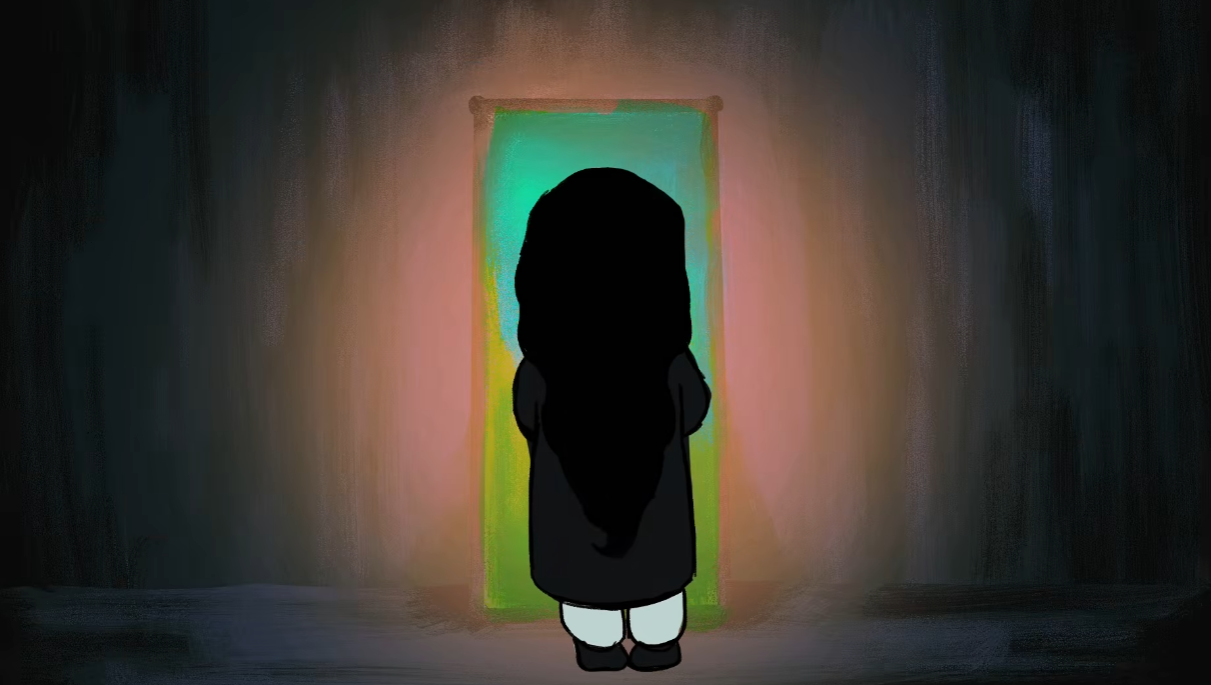

Nostalgia is a Venus Fly Trap
Telling Childhood
[0:00] – [0:11] The House
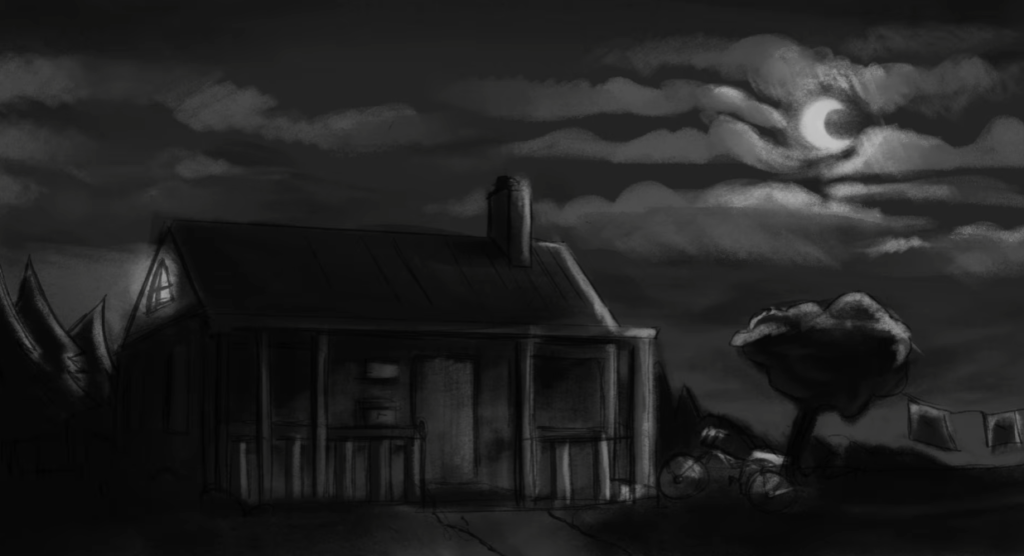
The very first post-title frame tells an immediate story about the setting and the protagonist (Black and White Babs, or BW Babs). It’s intentionally grayscale. We’re looking at a small, single-story house. The environment looks relatively safe and clean (no trash strewn about or signs of danger), but it’s a low-income family. Clothes hang on a clothesline. A bike is parked by a tree. Large cracks line down what could be a driveway.
It’s possible that the time period was before automobiles and commercial washing machines, but based on the architecture we’ll see, I lean more towards this being a home which can’t afford much.
[0:11] – [0:22] Gray Drawings
When I was a girl, I dreamt of dancing
I dreamt of many things the heart could hold
A grayscale child draws grayscale art in her bedroom as the first set of lyrics fade in via an ominous, wispy voice.
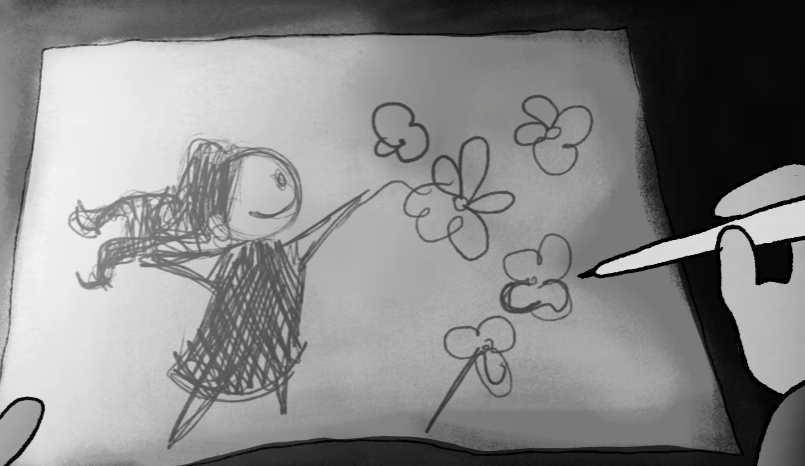
The drawing the child works on is distinctly happy. It’s a self-portrait, specifically smiling, while accompanied by flowers. But the thread connecting one of the flowers to the girl’s hand implies she is either reaching out to the flowers or that she is creating them magically.
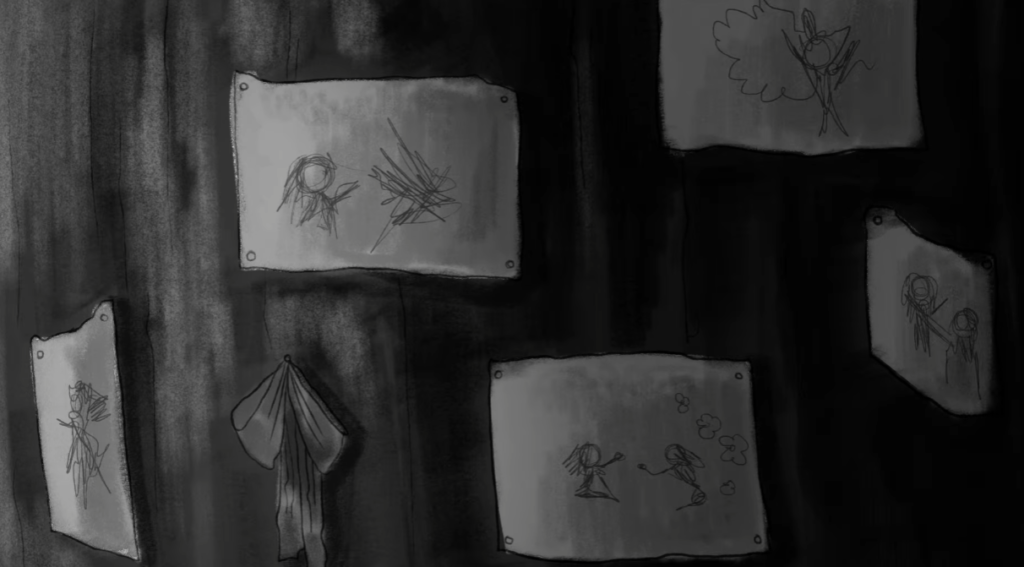
We see the older artwork nailed–or pinned–to the wall along with a limp bow. This frame alone says so much about the child. It’s hard to make out all the details, but the far left piece looks to me like a warrior princess, with flowers in her hair, wielding a sword.
The top right piece shows some kind of creature person–perhaps a cat–who wears a blowing cape or is breathing fire. It could be some kind of monster.
The furthest right drawing is probably two girls playing on something akin to a seesaw, but it could also be one character impaling another during some magical quest.
The bow is fascinating because it looks less like it belongs to the child to wear and more like it’s being displayed as a trophy. Was this bow something the girl took–or was gifted–from someone else?
The two most impactful pieces are the center-left and bottom-right. The animation lingers on the bottom-right one, showing two girls sitting and interacting–probably playing–with flowers or magic around them. But the center-left piece is similar, yet altered. One of the girls is scribbled over, and there’s a smudge where the magic/flowers would be.
What I find especially fascinating here is that the girl displays the scribbled-over piece. Even small children typically don’t tape or pin mistake artwork… which means this wasn’t likely a mistake. All of these feel like memories, and not all of them are pleasant.
The lyrics paired with the illustrations imply that these are from a dreamland, or perhaps something slightly more tangible, where the girl interacted with different people, took momentoes with her, and maybe recalls happy and bitter memories.
[0:22] – [0:34] Sad Doll
I’d nurse my doll, would love and care for him
Would breathe life into him
For I believed…
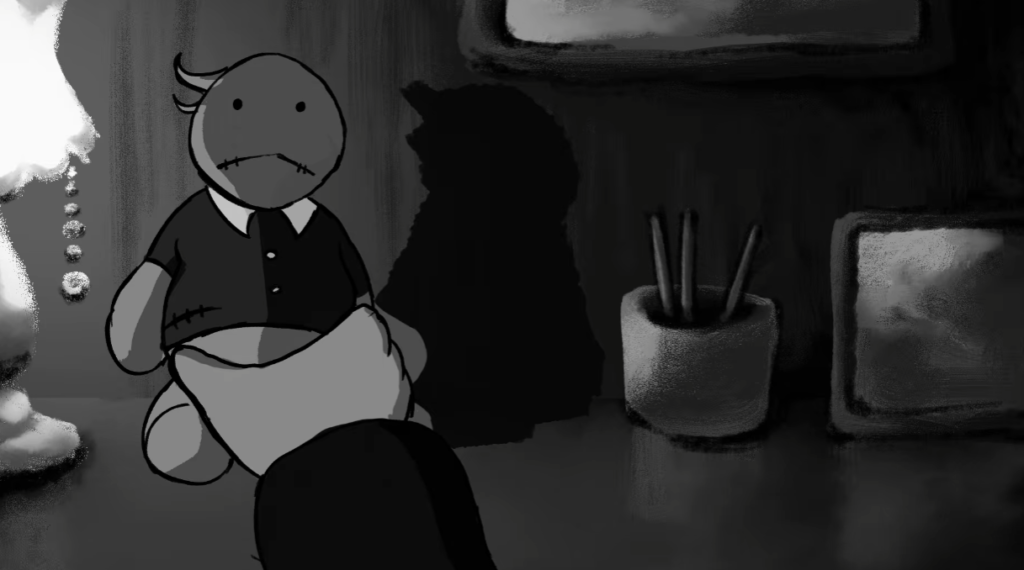
The girl has a personalized doll on her shelf. It looks like something she stitched together, with a collared shirt matching her own attire and a few strands of hair meant to imitate hers. She carries it gently across the room and to her mirror.
It’s possible that the girl’s parents gave her the doll. The peripheral lamp looks quite fancy compared to the rest of the room, and the bits of supplies give me the impression that the child’s parents care for her. She is likely neglected in certain ways, but thus far, it seems that it is due to economic issues rather than uncaring parents.
The lyrics tell us the girl has maternal and kind instincts. These traits were likely instilled by her parents. Or it could be far sadder: that the child has observed happier, more stable families and wishes to imitate the idealized, nuclear unit to fill the neglect she’s experienced.
[0:34] – [0:55] Trepidation
The world was grand with many precious things
Fine air, such precious things
It was my world
The wind would blow wild with imaginings
I was so happy in my little world
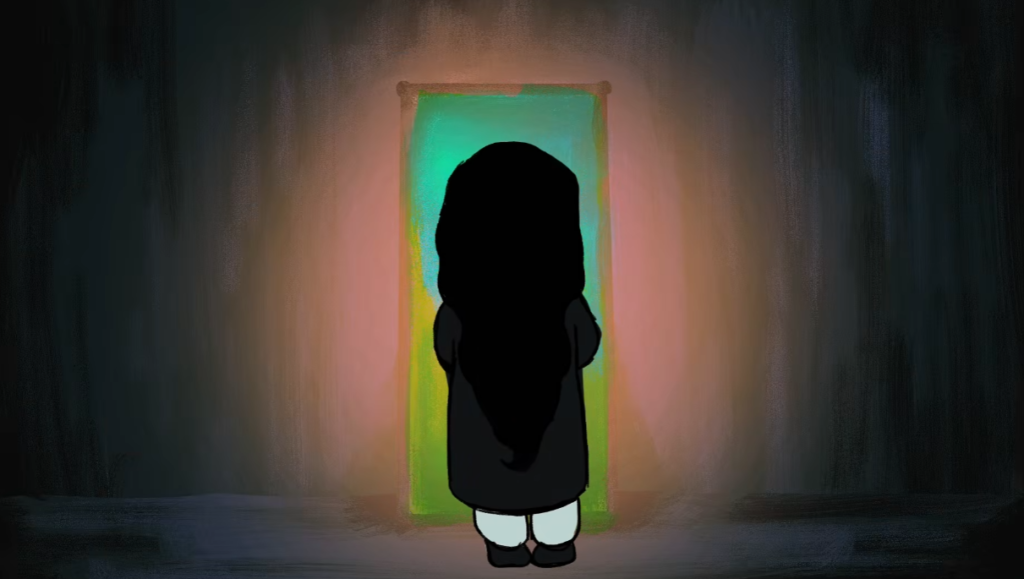
There’s an immediate contrast as color enters. The child brightens, and yet she doesn’t change from monochrome to match the warm hues. The world she sees through the mirror is enchanting and alive. And it has a bunny with the word “loaf” next to it, so how could you not love it; am I right?
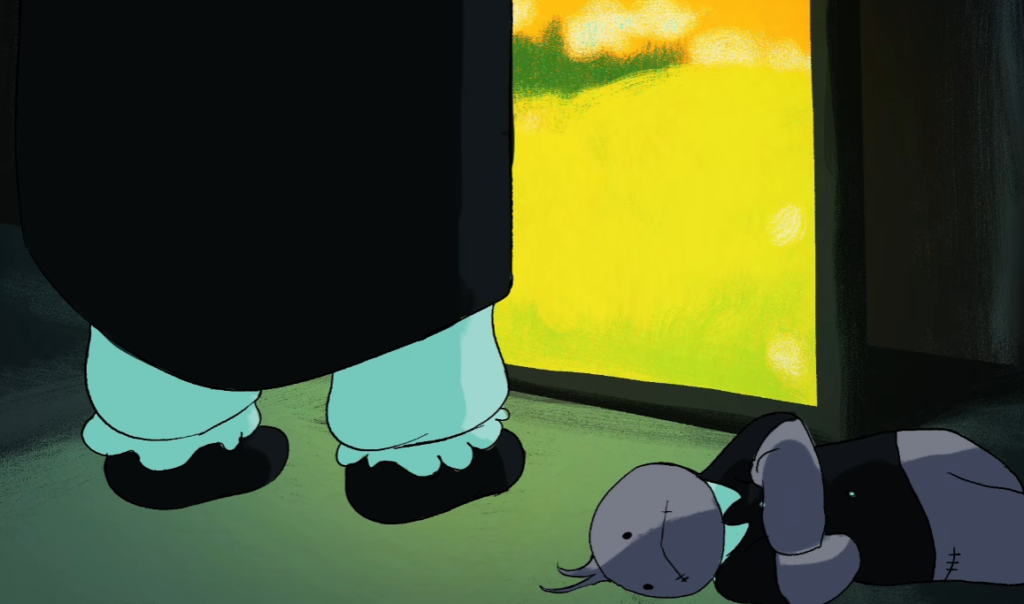
The girl has dropped her doll, having forgotten it when in the sight of this better world.
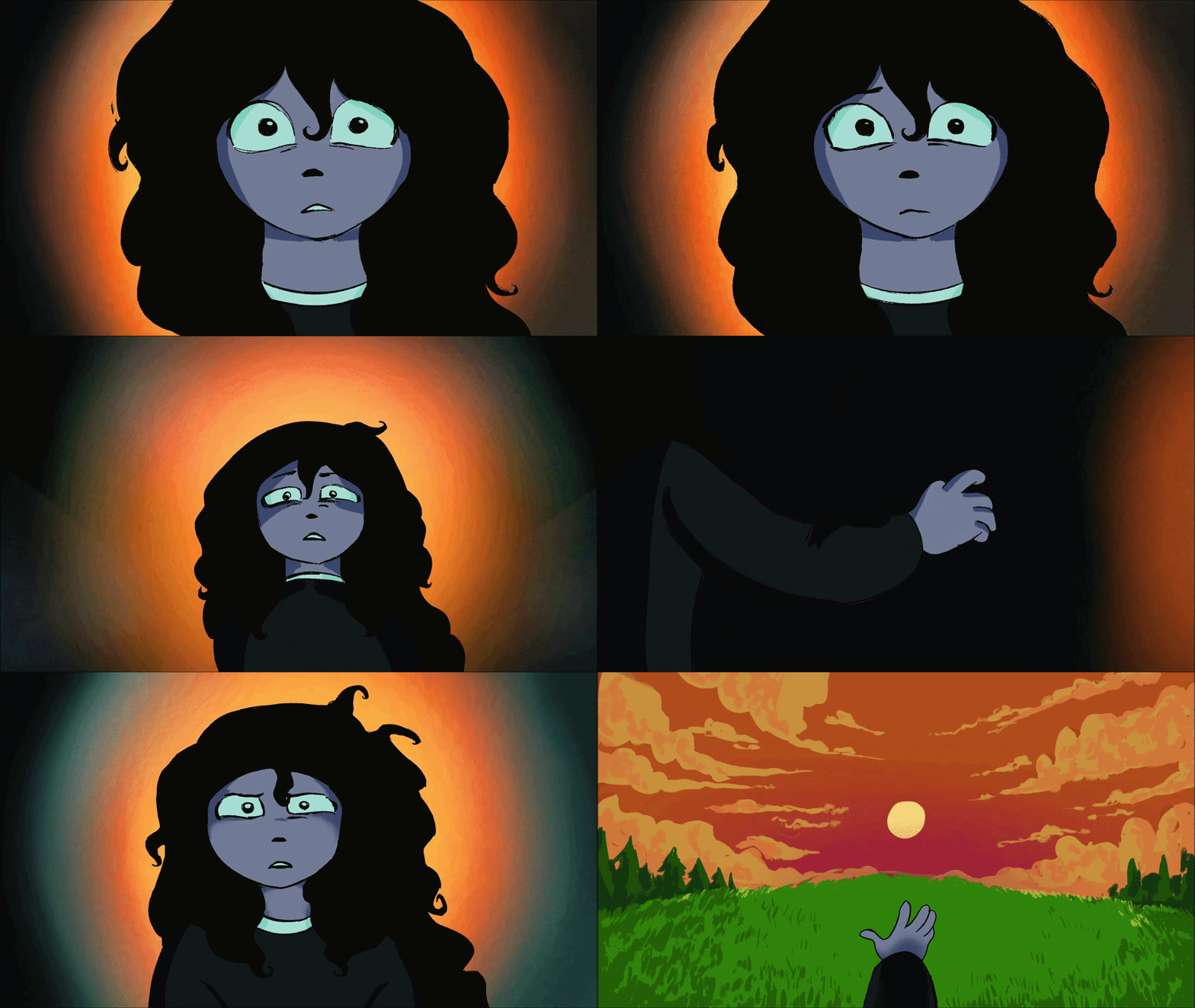
The way the child’s expressions change say so much about her personality. When she first looks into the magical world, she seems sad rather than excited. It’s as if she doesn’t believe it could be real.
Then, when she starts to feel the wind coming through, she becomes curious, but cautious. She doesn’t trust it. It’s like she expects a danger of some kind. It’s likely that she’s being raised to be mistrusting, no matter how nice something looks.
Then finally, the child’s youthful happiness wins out as she realizes she can reach into this inviting world. She smiles and steps closer.
The lyrics reinforce how possessive the girl is of this experience: how much she values it. The fine air in a grand land she calls “my world”. And we can’t ignore that these lyrics are linked to the last set. Put bluntly, she takes care of her doll like a mother should because she believes the world was a special place worthy of cherishing. But she distinguishes her world from the world. The land of her dreams, her doll, and the mirror are hers. It’s an escape. It’s a sanctuary.
[0:55] – [1:07] The Magic Kid
For the days were long in the summertime
With the sweetest taste in the summertime
There were secrets made in the summertime
There was magic
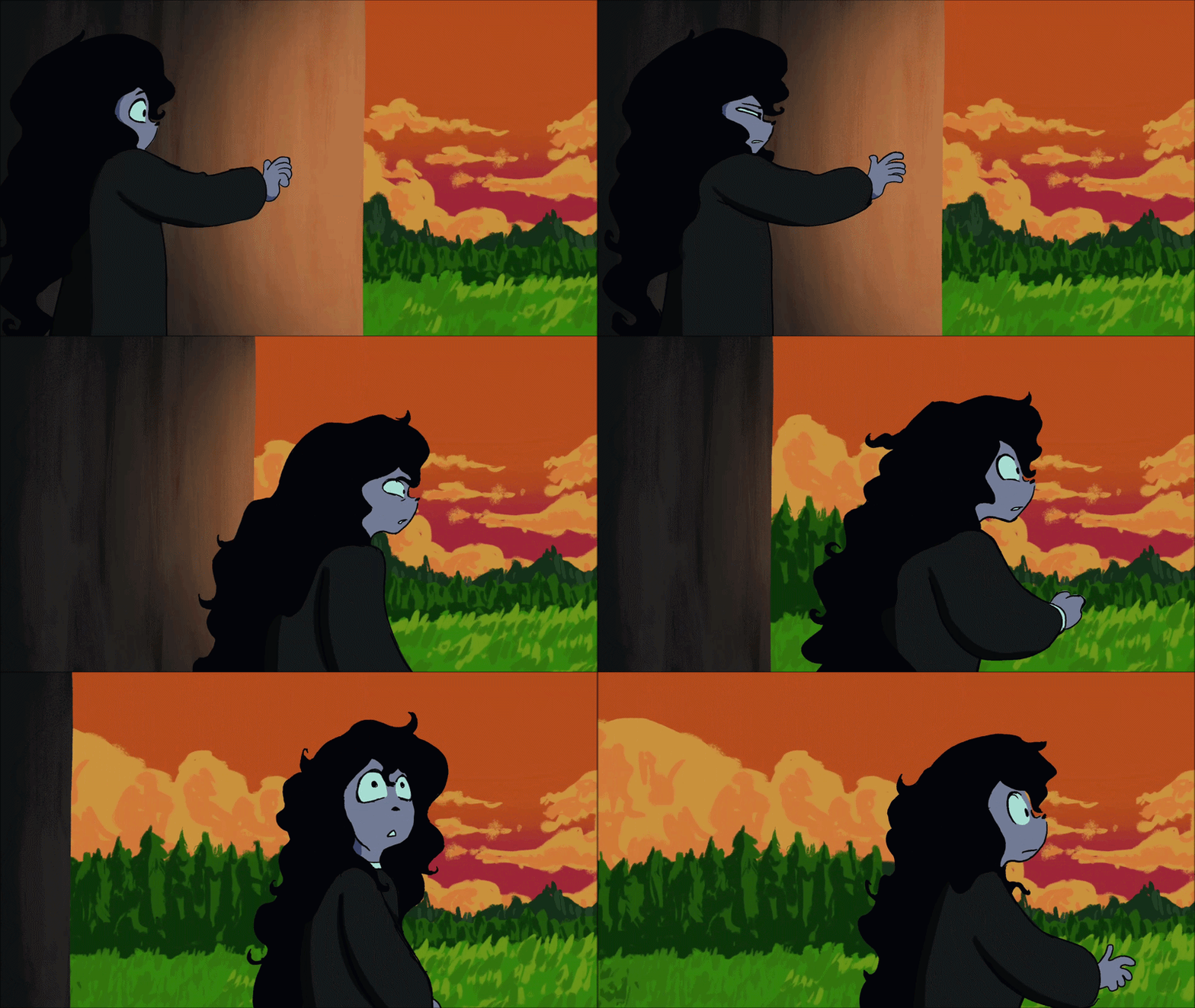
Child BW Babs nearly falls through the mirror as she steps forward. She’s still surprised it worked in spite of the confirmation of the wind and the warmth of the sun.
I absolutely adore how in spite of stumbling forward and having this frightened, wide-eyed stare, the child doesn’t stop moving. She’s far too enthralled by this lovely land. She keeps walking forward and looking around even though she isn’t smiling yet.
The girl chases a butterfly to the top of a hill. She smiles only to turn around and see something unexpected.
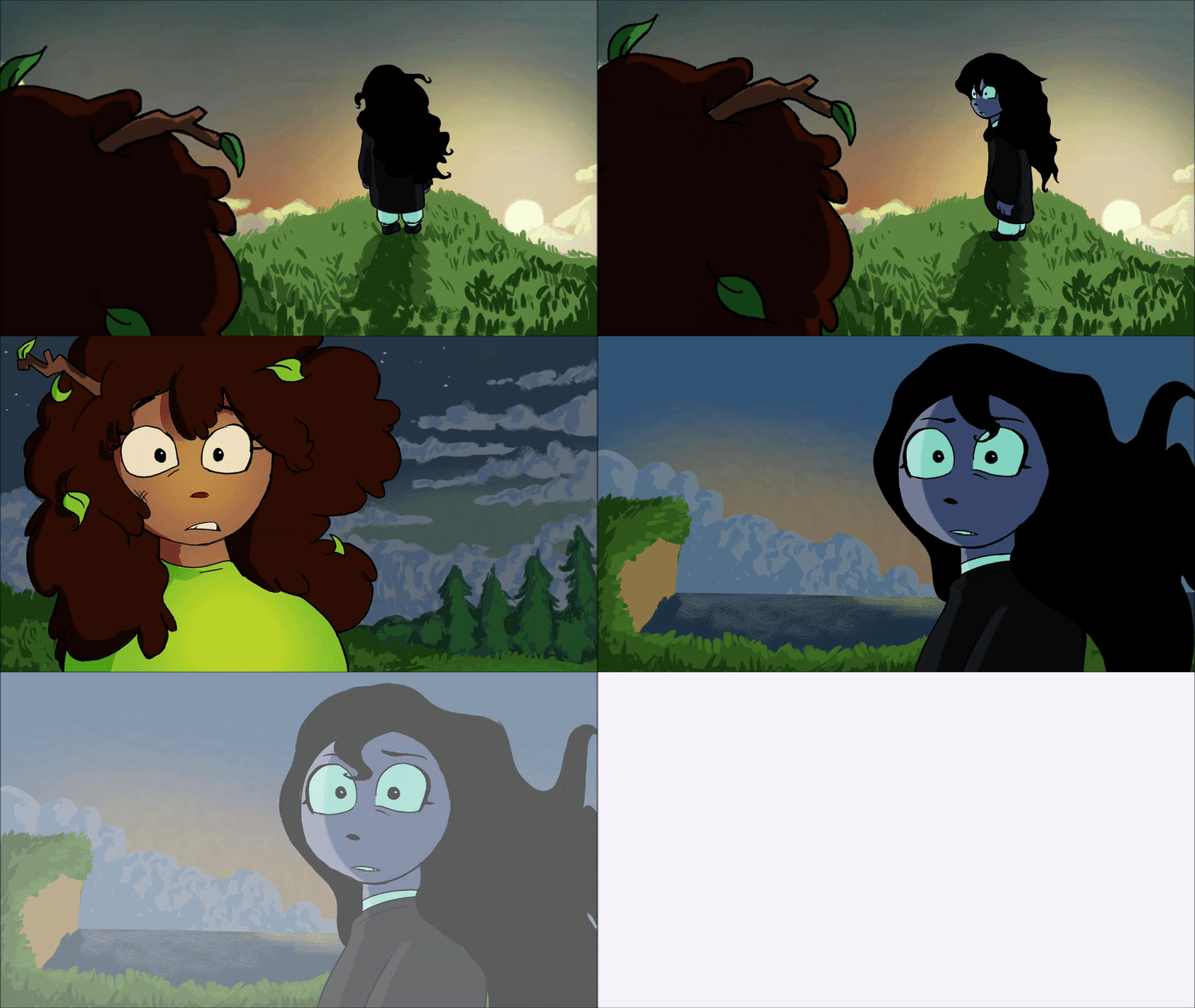
Black and White Babs meets Colorful Babs. Given that this is how the girls are described in the video description, this tells me this isn’t just some other world. This is an alternate dimension. BW Babs is meeting her counterpart. She’s meeting a version of herself she could have been.
The girls contrast heavily, beyond just the colors. C Babs has messier hair, with twigs in it, and a casual shirt. BW Babs is dressed more formally. And instead of smiling at each other, the girls are mutually surprised and possibly cautious.
It can’t be a coincidence that the lyrics which play the moment BW Babs sees C Babs are “There were secrets made in the summertime”. That says so much so fast. Whatever these two got up to was kept a secret. One could say it was to keep their worlds safe from opportunists. But the prior lyrics and possessive nature of BW Babs tells me it was for more selfish reasons. She wanted this sanctuary–and this friend–for herself.
Intermission: Design
A lot of indie animation tends to borrow from anime by giving humans these almost snout-like jaws, with the noses being little points at the end. When I first saw this animation, I wondered if that was the case, but having inspected it closely, I was pleasantly surprised by a more enchanting comparison.
Clownibabs’ art style looks heavily inspired by Clive A. Smith, particularly with works like Rock and Rule. But the haunting magical aura of this animation also made me think of Dr Seuss, especially the Who’s. It’s this world with so much familiarity to our own while still being distinct, and even uncanny.
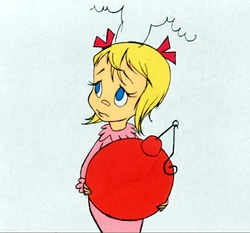
The way these characters look almost like animals, but not quite, gives a very personal and magical distinction.
Remembering
[1:07] – [1:19] Adulthood
Now I have grown and life is kind to me
I have some misery but don’t we all?
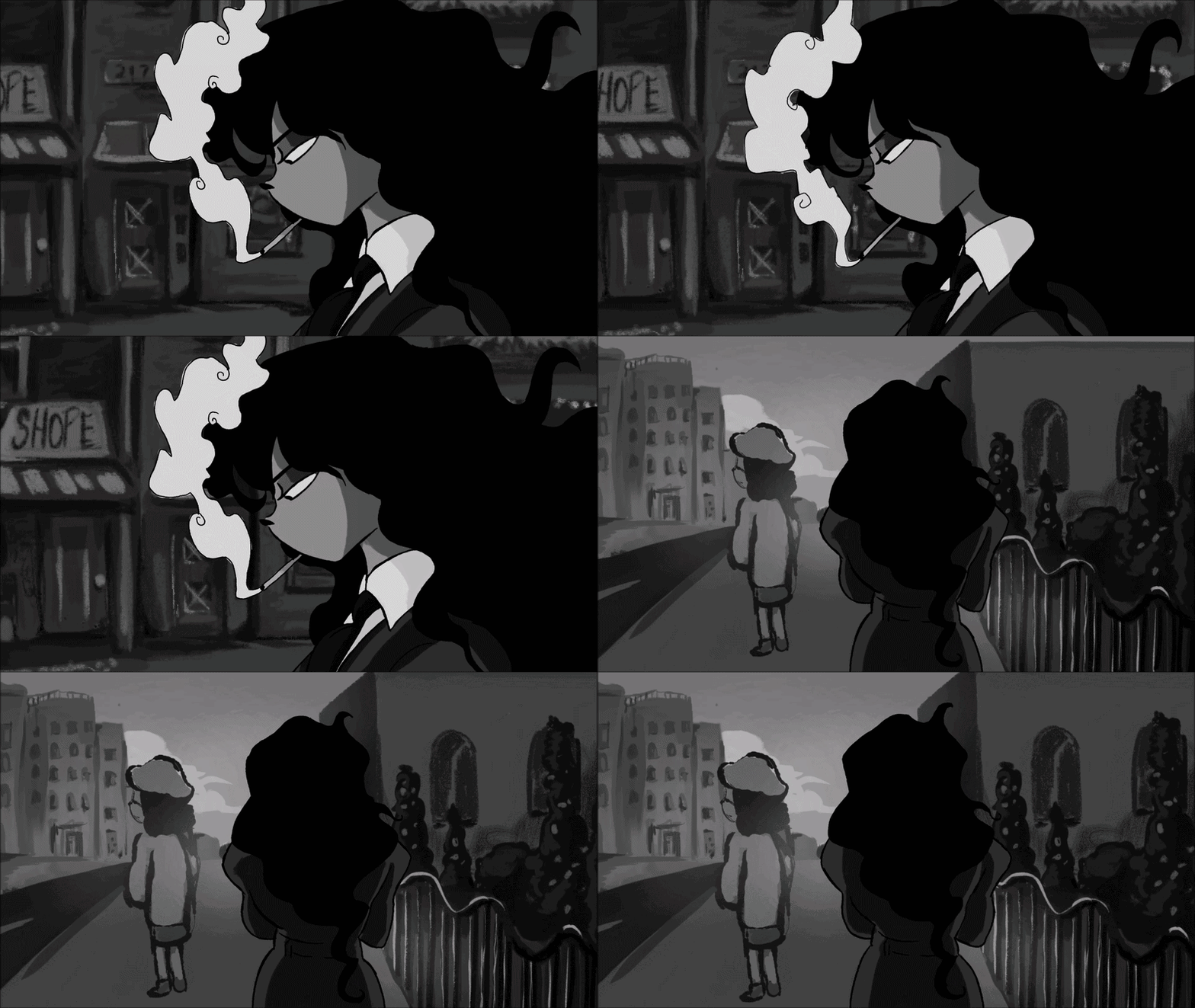
You may notice how the footage fades out to white from the warm childhood but abruptly cuts to the now-adult BW Babs back in the monochrome world. To me, this is just another way of distinguishing the gentle and pleasant memories from the harsher reality of being an adult.
BW Babs is dressed as you would expect an adult version of herself to be. She looks strong yet mundane. She’s in a nice coat, wearing a suit. She’s smoking a cigarette. Her suit gives her these broad shoulders. And we see she has a level of danger to her when she’s knocked into by a passerby. She makes this scowling face, showing sharp teeth, but refrains from lashing out.
Most important, however, is that the adult is sketching something. It’s not easy to draw while walking, especially without something to support the paper. This had to be a skill BW Babs worked hard on. And we see her smile briefly at what she’s sketched before she’s knocked into.
The lyrics paint a clear picture once again. The adult is living a perfectly stable life. It isn’t perfect, but she doesn’t consider herself uniquely downtrodden or mistreated. She may not be “happy” exactly, but she’s content. Or at least, she thinks she is.
[1:19] – [1:30] It All Comes Flooding Back
Our path is so long that many lose their way
Longing with everyday for what went wrong?
The adult goes to pick up her paper only to be seemingly surprised at what she’s looking at.
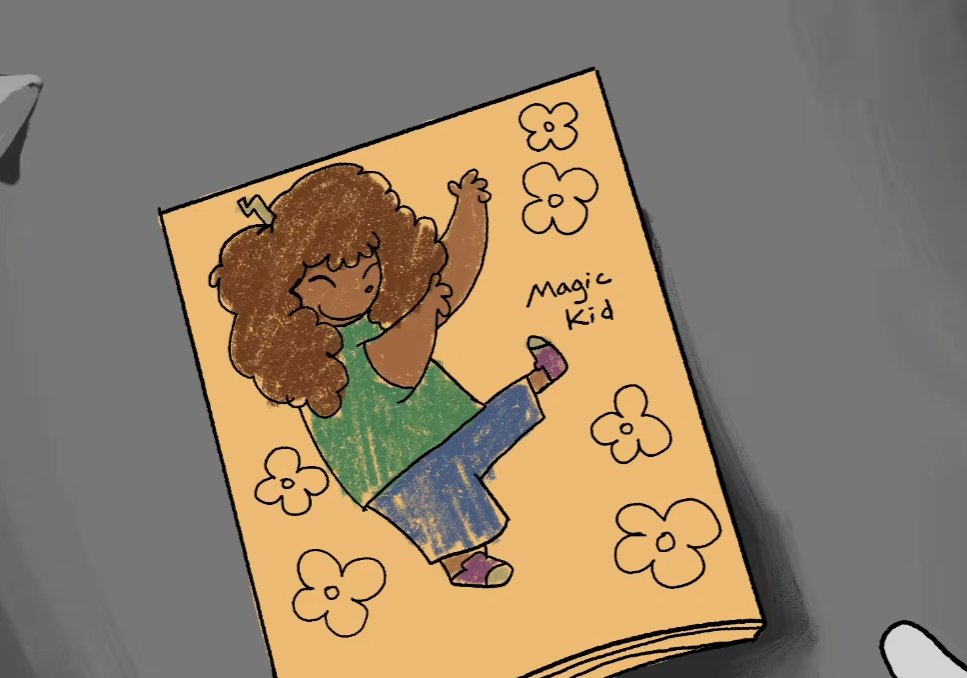
It’s her counterpart: Colorful Babs, or Magic Kid, as she knew her. But hold on. When BW Babs was sketching, the paper was monochrome. Yet, when she goes to pick it up, it’s colorful. And look at the quality of the artwork. It’s definitely better than the drawings we saw at the start of the animation, but not by much. It looks like something a child drew, not an experienced adult.
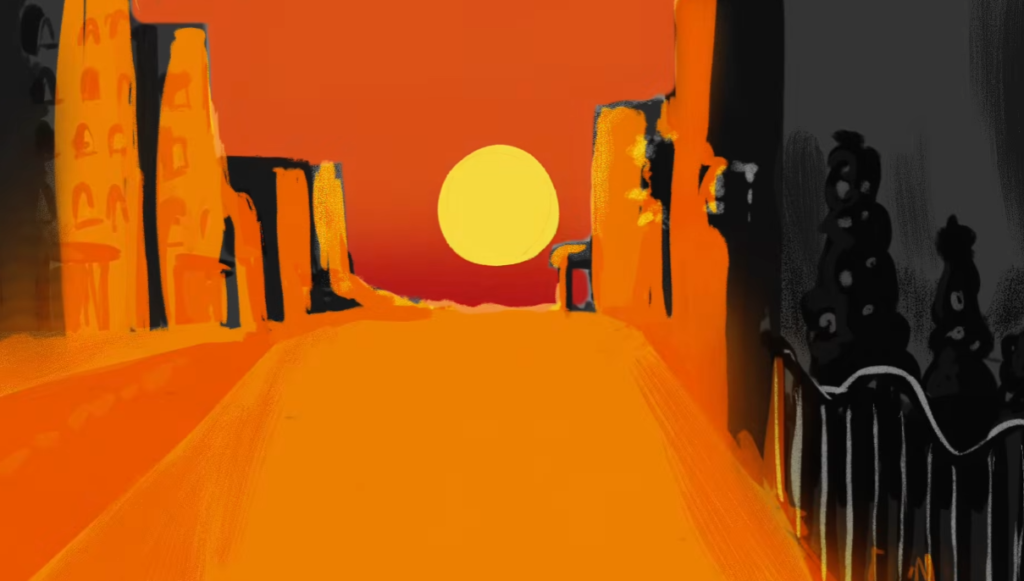
We see color pouring into the monochrome world. The buildings are tinted by a summer sunrise, but there’s this distinction between the sun tinting the buildings and the skyscrapers actually sharing the warm hues.
[1:30] – [1:41] Nature Vs Nurture
For the days were long in the summertime
With the sweetest taste in the summertime
There were secrets made in the summertime
There was magic
My favorite moment of the entire animation happens here.
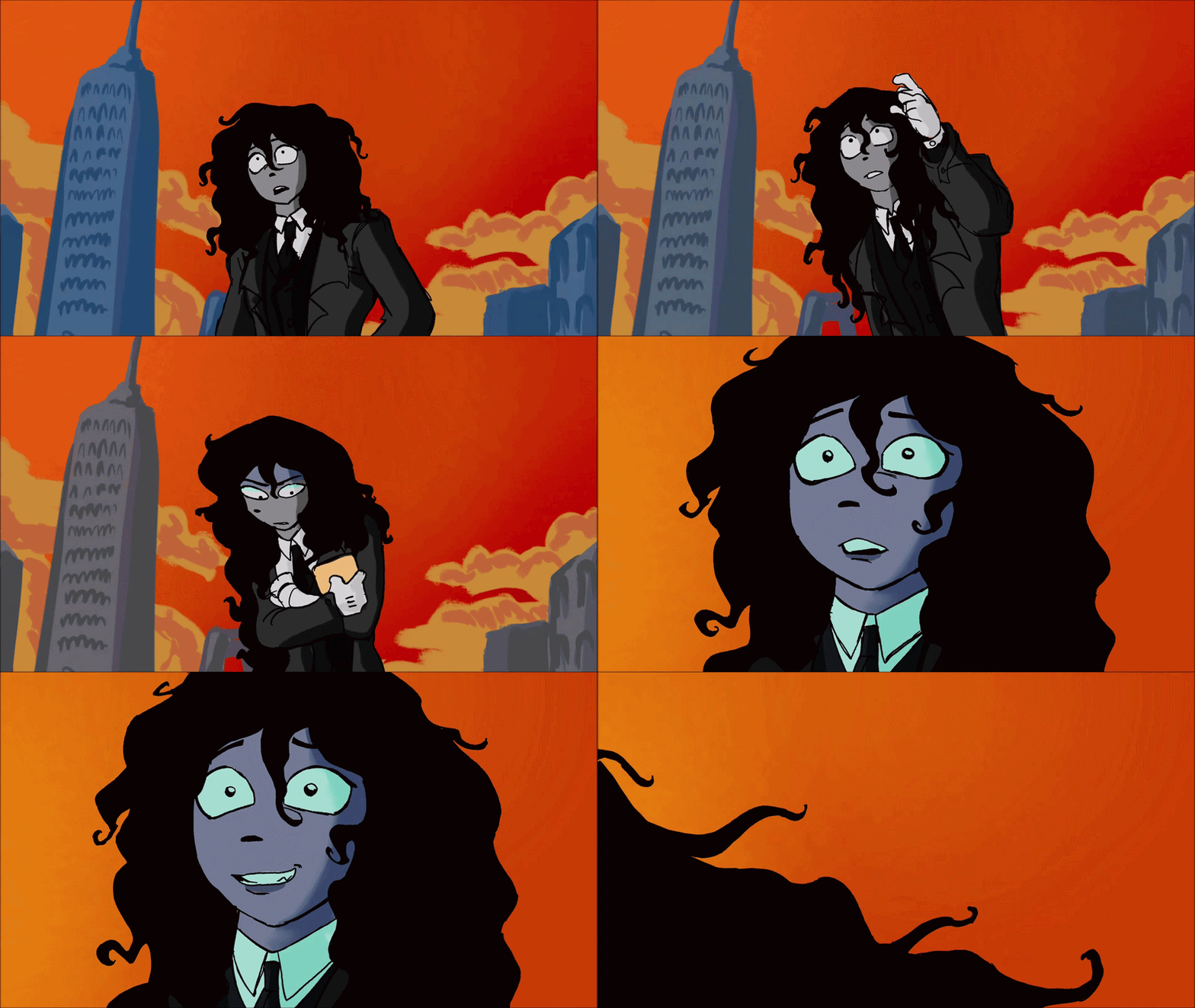
The adult’s hair is still. She stares in shock at the colorful sunrise. Then her hair starts to blow in the wind. On instinct, she reaches her hand out, just like she did as a child. But then she catches herself. She pulls her hand back down out of embarrassment. After all, she’s in public. “Remember your training” and all that.
But then she keeps staring, and she stops caring. The warm memories come back, and she runs forward.
I don’t know if this was intentional, but I also noticed how when BW Babs lifts her hand, the buildings get more color to them, and then they fade back to the slate color when she pulls her hand back. It’s almost like her starting to give into the magic is making it spread more.
Also notice how her papers are colorful while she holds them. I have a theory: I don’t think she was sketching the Magic Kid at the start of this adult section.
BW Babs is happy with what she’s sketching–or writing–at the start, but when she sees the picture of Colorful Babs, she’s confused. She even looks concerned. I think one of two things are happening.
- The magic from the other world is reaching out to her through the paper and the world, as if it’s leaking through.
- BW Babs is projecting her memories into her world.
I don’t think the sun in the monochrome world is actually colorful. I think it’s just as gray and cold as everything else. No one else except BW Babs reacts to the sudden warm colors. This feels like something she is uniquely experiencing.
[1:41] – [1:51] Indulging
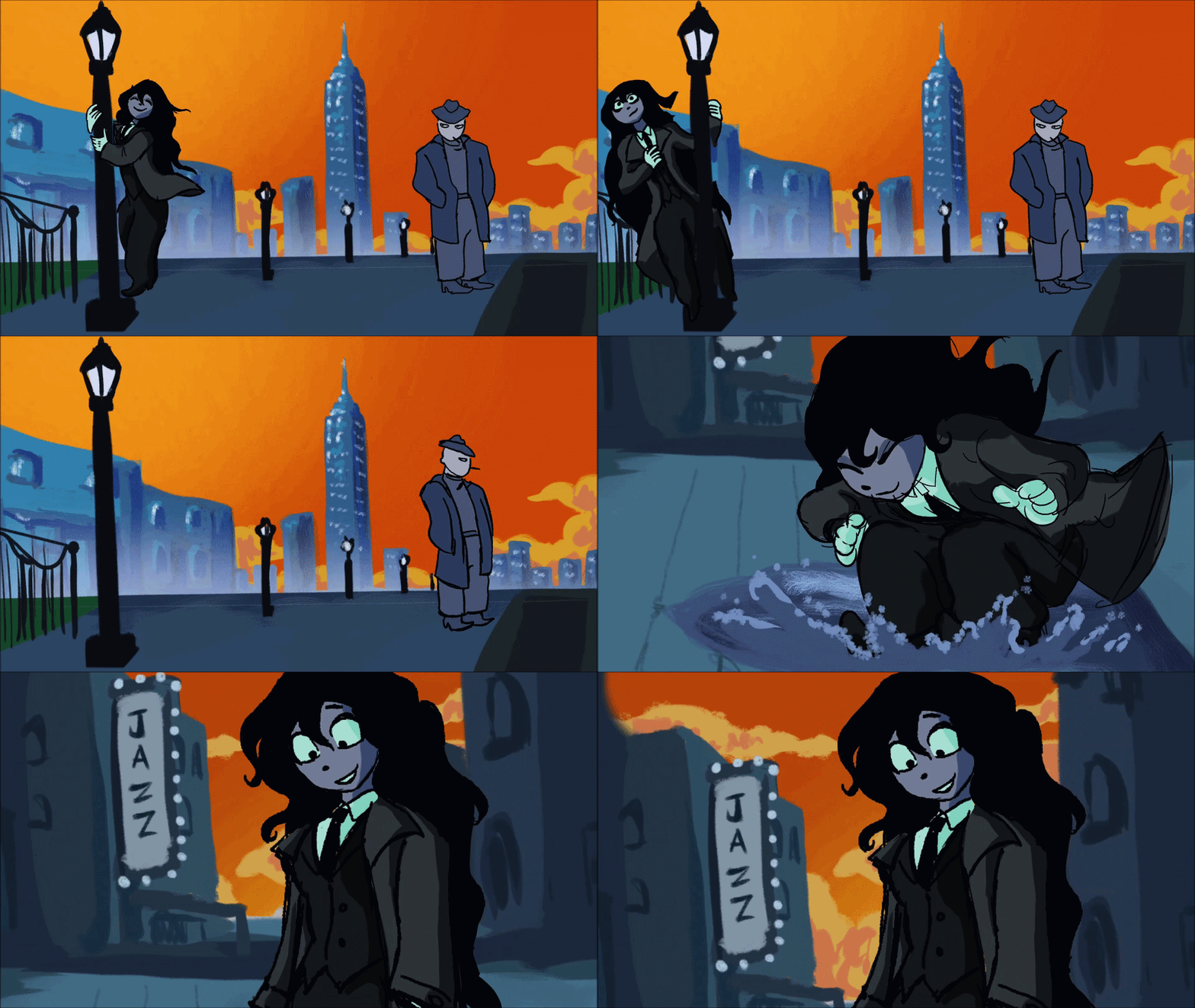
BW Babs indulges in the whimsy of the moment, even doing something improper and childish as jumping into a puddle of water. She gets a glance from someone, but no one seems to really care about what she’s doing.
These are such small gestures. Swinging from a lamppost and playing in a puddle aren’t the most magical things in the world. And yet for BW Babs, it’s special.
Remember the earlier lyrics: “Now I have grown and life is kind to me; I have some misery but don’t we all?”
Life is kind to BW Babs (at least, that’s what she says), but that doesn’t mean she’s happy. That doesn’t mean she’s got what she wants/needs. Going back to her parents: for all we know, they were good to her. But that doesn’t mean she grew up without missing things.
There isn’t a villain in this story (yet). We don’t see anything implying someone wronged BW Babs. Because that’s one of the hardest truths about adulthood: You can’t always find someone to blame. Life doesn’t always go the way you hoped. And there are plenty of people and circumstances you can blame for struggles (economic, racial, religious, etc.), but most of life’s shortcomings are just random cause and effect. You don’t always get what you want. You learn to be content with what you have.
But looking at the paper again, BW Babs almost immediately concludes that she can’t live the way she has. She’s had a taste of something better, and she wants it back.
[1:51] – [2:12] Childhood Home
Below the sky, lost children find their way
Weaving through life’s highway through joy, through pain
When summer has gone darkness can swallow you
And happy times once new
Will fade to grey
The lyrics practically spell it out. Lost children have to find their way through life’s struggles. After Summer is over–after the magic of childhood has passed–the trials of growing up and staying grown up can consume you. And the warm memories will either dull or be forgotten entirely, almost as if as part of a defense mechanism.
BW Babs goes back to her old home. She walks past framed family photos, and we see her child self smiling in one. This only reinforces to me that she had a loving childhood even if it wasn’t a happy one.
The adult goes to the old mirror, still in her old bedroom, and sits in front of it. And the visual of her reflection is telling.
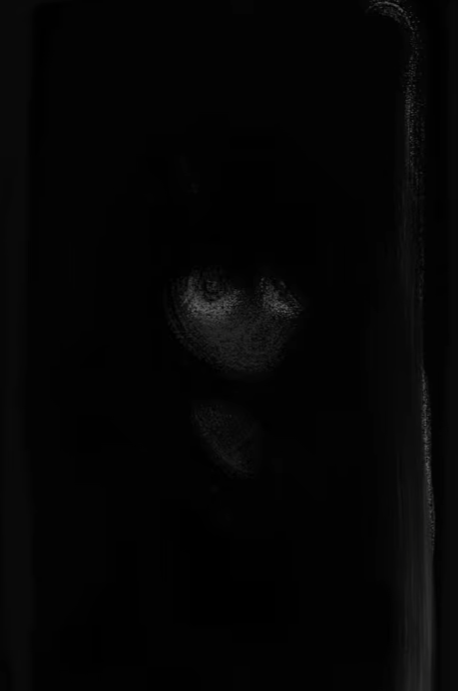
The dark, distorted reflection is haunting. And the way BW Babs clutches the sides of the mirror shows how desperate she feels. And while desperation is an empathetic experience, it’s also dangerous.
[2:13] – [2:34] Reunion
Yet, if my dreams were to all burn today
I wouldn’t run away, call me a fool
For I believe
And if I never see
If it’s denied to me, quite lost I’d say
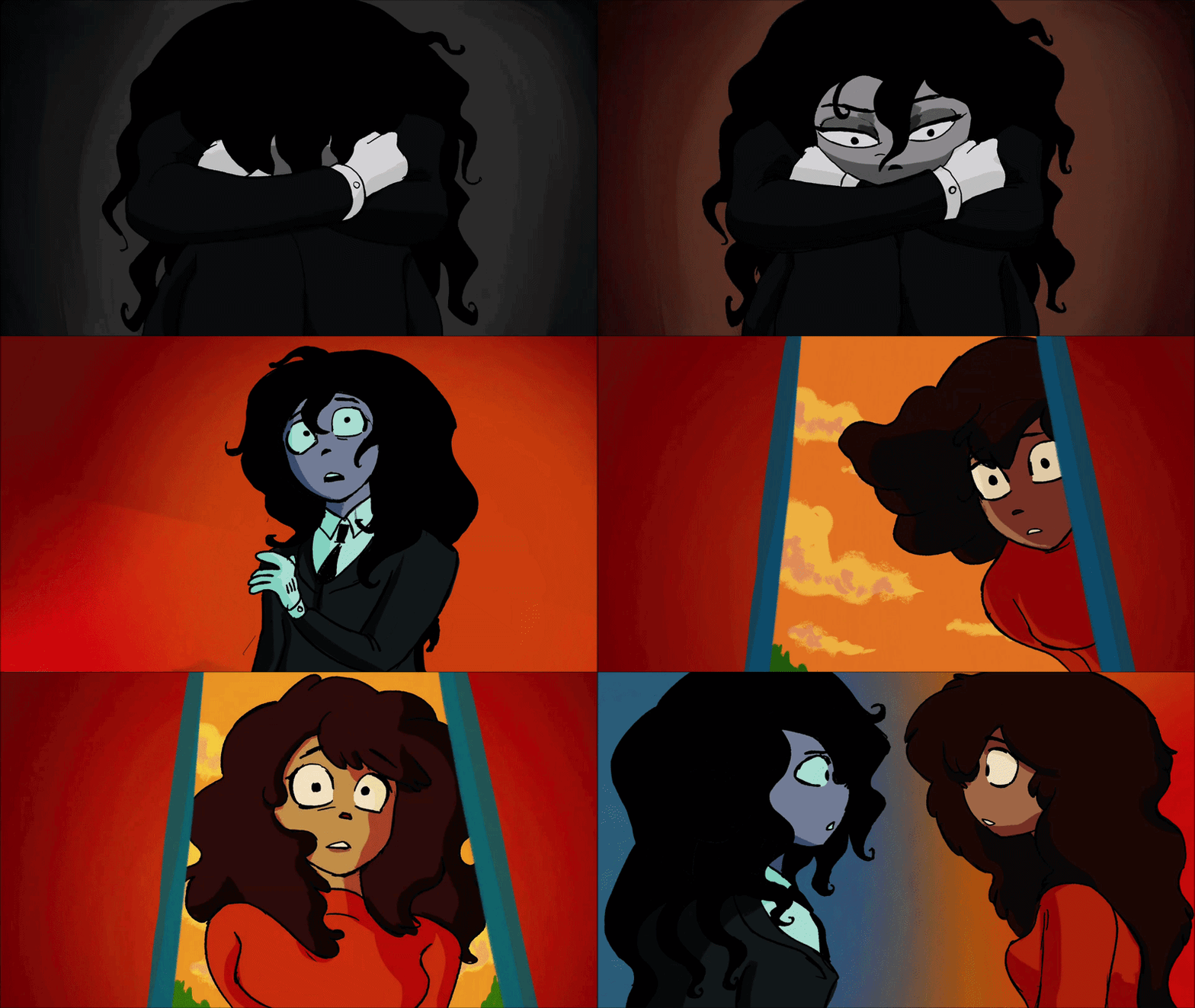
The mirror doesn’t activate, at least not initially. The adult is heartbroken. She hugs herself while turning away and starts crying. But then…
The magic comes in. And not only that, Colorful Babs returns. She’s older. She isn’t messy. She doesn’t have sticks in her hair. But she’s still herself. The two girls–now women–contrast each other, once again not just in color, but style. The rigid suit of BW Babs is different to Colorful Babs in this form-complimenting sweatshirt and shorts (or a skirt).
Notice how the mirror, and everything around it, brighten the longer Colorful Babs lingers as well. It’s as if the connection of the two is what makes it stronger. And how did they both know to come to the mirror at the same time? It’s likely that Colorful Babs saw something which reminded her of BW Babs in the same way that BW Babs saw her old drawing.
The lyrics give some dark foreshadowing to how this story ends. To me, it reads as saying that if something were to happen to the adult’s dreams from childhood, they’d rather die with them, because they feel lost without them. It’s quite plausible that upon being reminded of the Magic Kid, BW Babs realizes just how precious those memories were and how she can’t bear to lose them again. She’d be lost. She’d feel hollow and broken.
[2:34] – [END] Betrayal
Oh the days were long in the summertime
With the sweetest taste in the summertime
There were secrets made in the summertime
There was magic
Oh the days were long in the summertime
With the sweetest taste in the summertime
There were secrets made in the summertime
There was magic
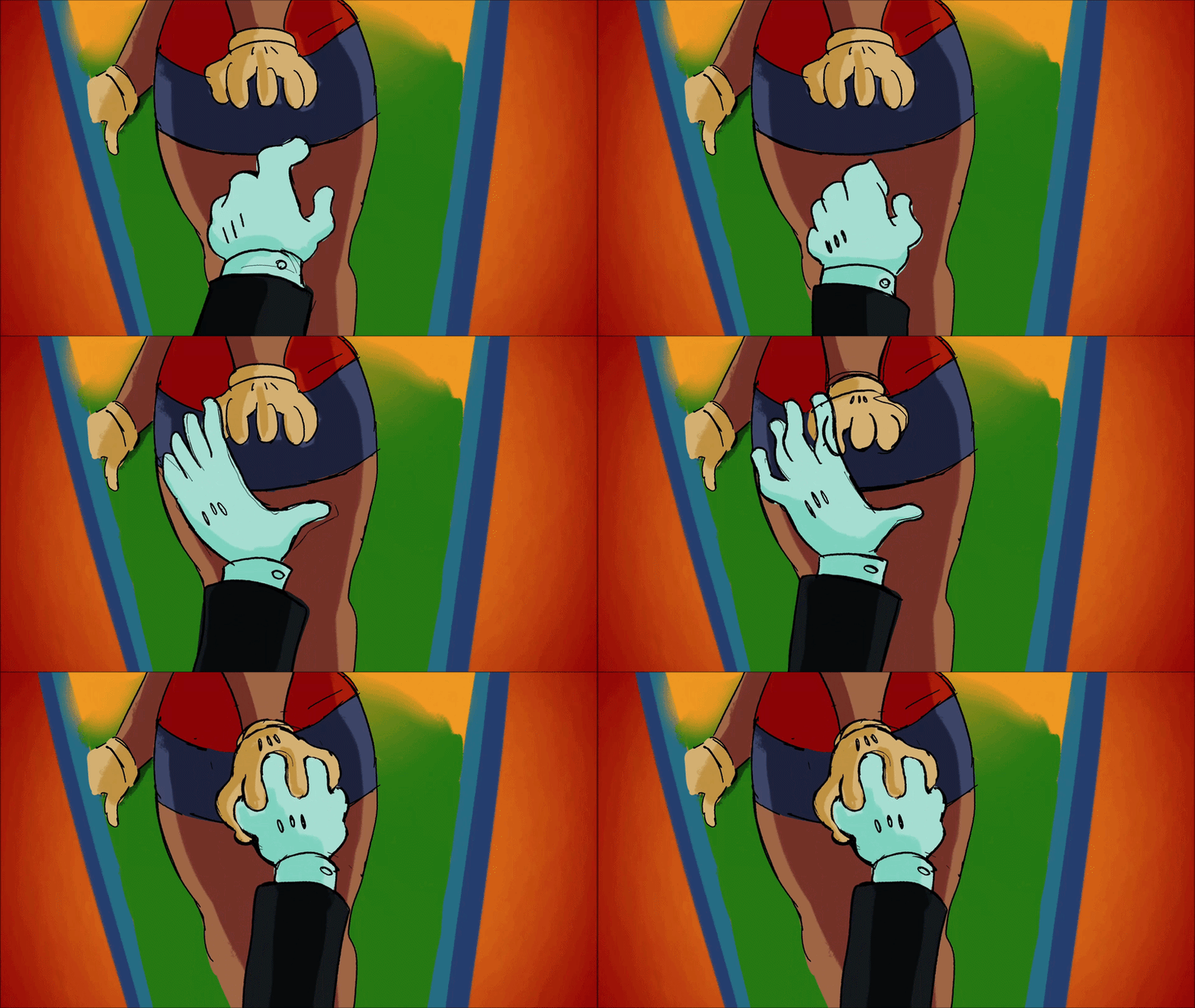
It starts on such a warm visual. Both women tentatively reach out and join hands. They trust each other. It must have been at least 10 years since they interacted, and even now, it must feel hard to believe it’s real. And it continues the theme of reaching out: just like the child did at the start to test things and then when the adult did toward the sun as an instinct.
But something isn’t right.
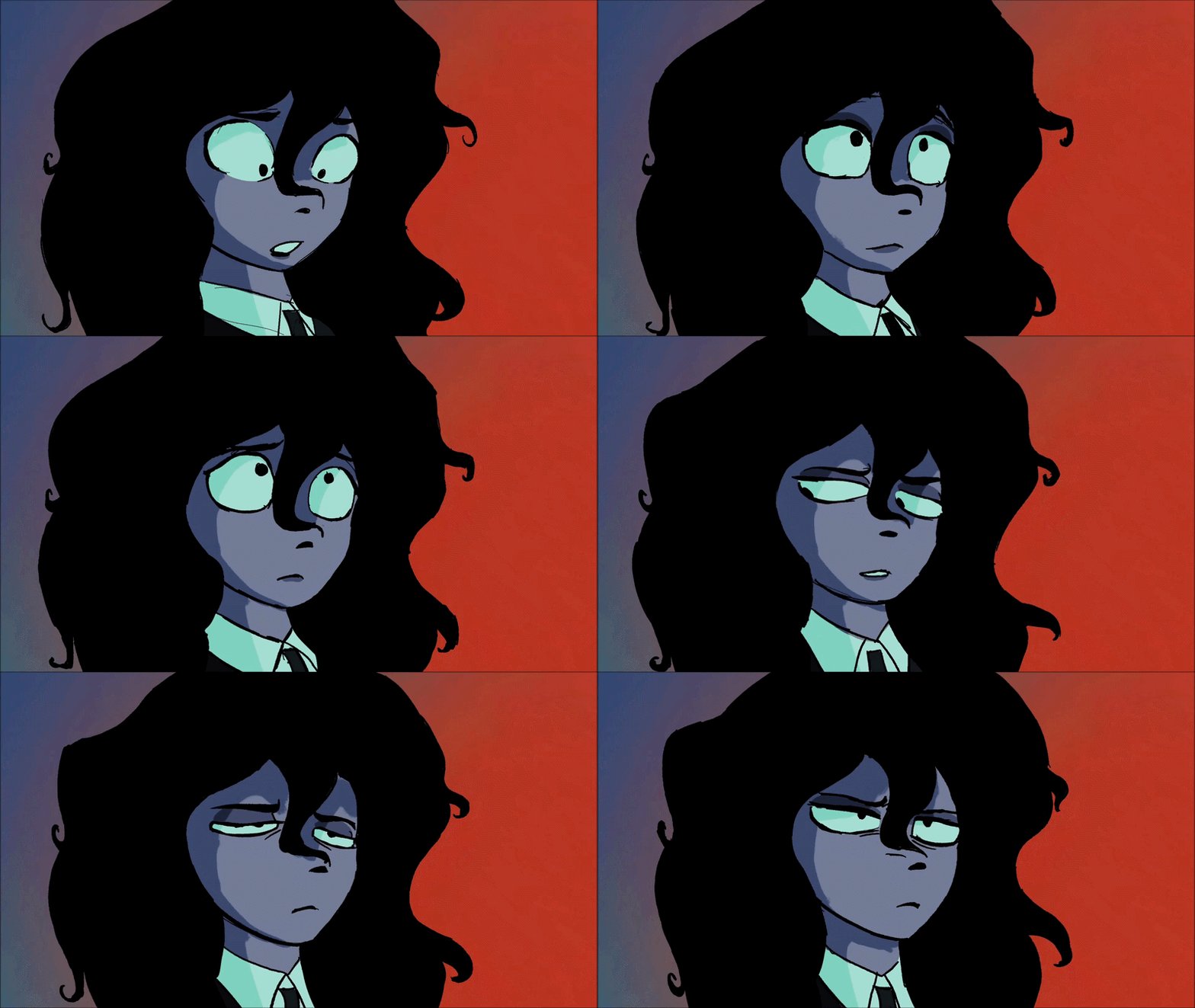
When I saw these series of expressions, I thought of a scene from the 1998 film Prince of Egypt [1:30 – 1:47]. The way Pharaoh goes through a series of emotions: you can understand his thoughts without the dialogue. The same applies here.
First, BW Babs is surprised. It’s real. She’s holding the hand of the Magic Kid. She can feel it.
Next, there’s empathy. She looks sad as she stares up at her counterpart’s face. She feels for her; why, we don’t yet know.
Then comes guilt. BW Babs’ eyes dart away as she considers her actions. She’s probably calculating the risk vs reward. She’s probably thinking of what she’d be doing to Colorful Babs.
Finally, there’s the decision. BW Babs resigns herself to her choice. Her face is now cold and vaguely hostile. If I had to guess what she’s thinking, it would be something like, “She’s had this wonderful life in that wonderful world all these years while I’ve been here. It’s my turn.”
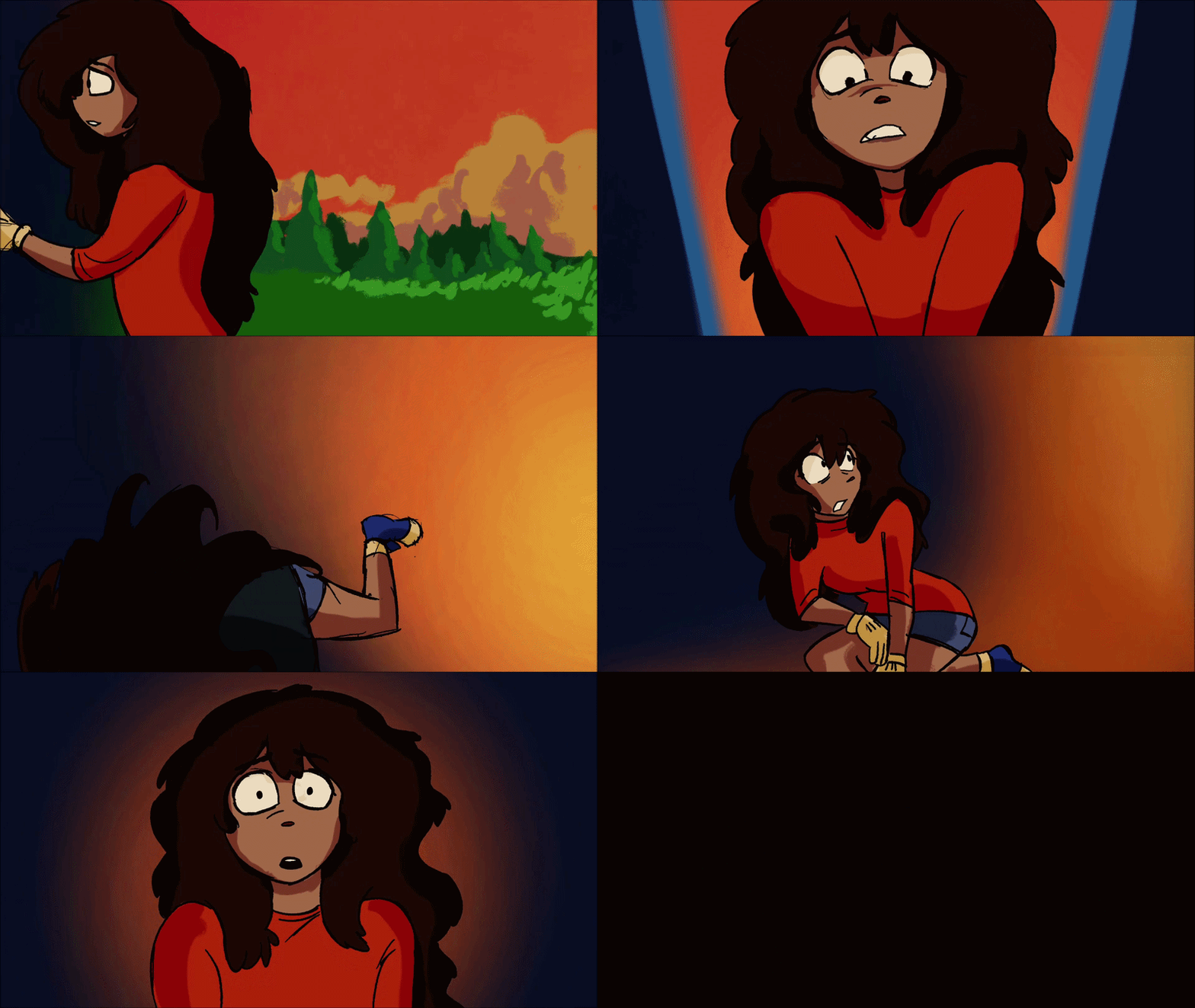
Colorful Babs probably expected her old friend to come through the mirror with her… only to suddenly be pulled forcefully through herself. And while she struggles, you can see the predatory, hostile, dangerous determination in BW Babs’ eyes. Showing her scowl and fang teeth only enhances how driven she is.
Even after being pulled through, Colorful Babs is more confused than anything. She doesn’t tackle BW Babs. She doesn’t run after her. She gets up and follows with distress, but clearly not with the intent to cause harm. She doesn’t have those survival instincts. Because either she didn’t struggle in the same way BW Babs did, or she retained her humanity in spite of it. She doesn’t even realize what’s happening until BW Babs is on the other side of the mirror.
And let’s not ignore that the story doesn’t tell you this is necessary. For all we know, both Babs could live in the magic world. But BW Babs decides to replace her counterpart. It’s as if she doesn’t know it’s mandatory but assumes it regardless. The world she’s grown up in is one of “everything has a price” so she doesn’t even consider that she could be happy in this other world without doing this horrible thing.
The main chorus playing twice is almost like a chant now. BW Babs is telling herself about all the things she wants and needs in order to motivate herself to do something this terrible. And it recontextualizes the “secrets made in the summertime.”
After all, who is going to believe some girl about a magic mirror?
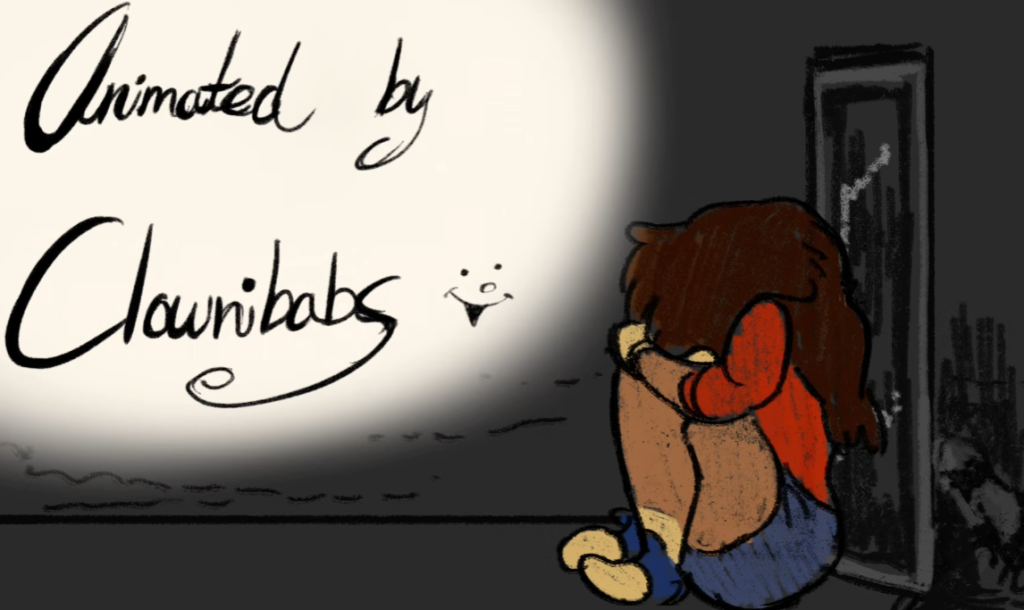
The final visual is of Colorful Babs crying against the mirror, now trapped in the monochrome world.
Notice how neither girl changes when going to either world, as children or adults. BW Babs is taking the colorful world for herself as someone dark and selfish: someone hurt by her experiences and taught to look out for herself.
In contrast, BW Babs is trapped in the monochrome world. She’s a warm presence, gentle and considerate, now forced to stay in a place foreign to her in the worst way. The vibrancy she knows is gone.
One commenter by the name of @Funinightmare had this to say about the ending:
“I like to imagine this girl [BW Babs] chasing this better world that she believes is full of magic is only going to bring darkness into it. Whereas her counterpart [Colorful Babs] is going to bring light and hope into this dark world she was forced into.“



Maybe it’s a paradox and BW switching places with Color is what causes BW’s original circumstances. Her color would begin to fade over time while trapped in a world of misery instead of her original bright world. Then when she opens the color door after so long and after being so jaded, she’s resentful of Color and switches places with her again in an act of revenge. So the cycle continues with them switching places in a paradox, bringing the end right back to the beginning forever.
Could be, especially since Clownibabs hasn’t directly stated what everything means. I think there’s some complications with the child versions of the kids, but I could believe there’s some kind of loop for sure.