Why GrimValor Deserves a Remake (Part 1: Intro and Gameplay) [Beyond Continuity]
Posted in :

Beyond Continuity analyzes the narrative and other elements of entertainment media, and offers suggestions/reinterpretations of that media.
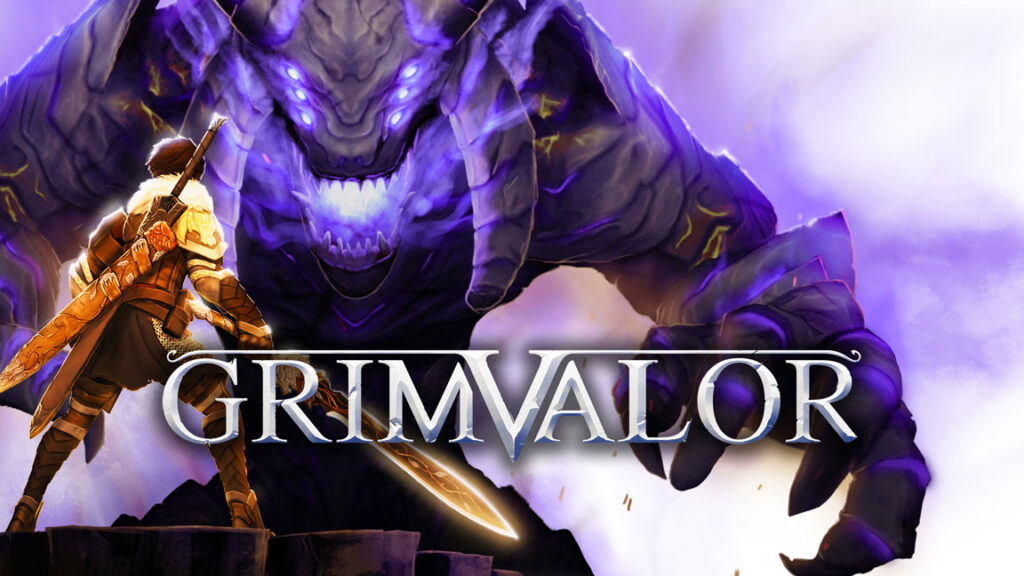
Mobile gaming has a bit of a stigma around it: drowned in gachas and shovelware of all kinds. But a particular diamond in the rough I remain fond of to this day is a metroidvania called GrimValor.
GrimValor was released for iOS on October 10th, 2018, and has since been ported to Android, Google Play, and even the Nintendo Switch. Strangely enough, it has yet to be ported to Steam.
Blatantly inspired by the Dark Souls series, GrimValor is a 2.5D dark fantasy set in the ruins of Vallaris: an ancient kingdom that fell to corruption and ruin some indeterminate many generations ago. The kingdom was forgotten until the creatures sealed within it began to slip out into the rest of the world. The player takes hold of a warrior scout, sent from an unnamed faction to investigate this lost kingdom.
Glowing Reception
GrimValor was–by all metrics–a rousing success, winning awards across multiple years. Ratings for the game are overwhelmingly positive. And reviews give consistent praise and recommendations.
GrimValor is not without its criticisms. Its shameless similarities to Dark Souls were distracting for some. The simplistic characters and lackluster attention to lore did not impress. The map design was described as unhelpful due to lack of detail. And the structure of certain combat situations (such as near-insta-kill boss fight attacks) conflicted with the game’s fast-paced, heavy-risk-encouragement style.
But in spite of the game’s shortcomings, gamers were satisfied with the content they received. GrimValor is a fun–if somewhat simplistic–metroidvania. It is exactly what one would imagine a mobile game interpretation of some AAA adventure to be like, which is to say it’s a digestible Dark Souls. It’s a Castlevania-lite. It gives you just enough mechanics, unlockables, platforming, and enemy variety to keep your attention. And there’s just enough story to make you wonder about the world.
So Where’s the Sequel?
No announcements have been made about a GrimValor 2 or any DireLight products since. The game has received multiple updates but no hints at future content. It’s entirely possible that the folks at DireLight are hard at work constructing the next entry, but I’ve not received any responses to my inquiries, and from what I’ve seen, neither has the rest of the internet.
Being honest, though, while I would love a sequel, I’d much rather see the original game get an overhaul: a remake/remaster.
What Needs Fixing in a Remake?
I love GrimValor. But having replayed the game to completion (including New Game Plus) across iOS and my PC, I have long-since removed and snapped my rose-tinted glasses.
GrimValor gets by with serviceable combat and exploration. Being able to level up, explore new areas, and face new challenges helps players look past the fact that just about everything in the game lacks depth and, at some times, polish. I’ll be discussing some of the key areas of the game and how they can be enhanced. But for this post specifically, we’re going to start with…
Gameplay
Whether you’re using touch-screen, keyboard, or controller, GrimValor’s gameplay involves traditional action-RPG-like mechanics.
- You have standard sidescroller left-and-right movement, complete with a double jump.
- You have heavy and light attacks, with heavy attacks costing rechargeable energy slots.
- You have a variety of stats you can upgrade from gaining experience (damage, stun, health, etc.).
- You can unlock different weapons, upgrade armor, and purchase/discover trinkets which give you bonuses.
All of those aspects are overall serviceable. Of course, in a remake, there’d be some expected improvements. The weapons do have some variety, but their functions remain the same. Having the option to wield a shield or projectile would be a welcome addition, especially because you can find yourself bombarded by attacks from off-screen enemies, forcing you to dodge or tank. Having a way to block attacks temporarily and strike from afar would balance tedious gameplay segments. As is, the closest the game has is the teleport attack, which itself has a very limited range, and doesn’t guarantee shielding from attacks.
But there is one mechanic which frustrated me more than anything else in this game, no contest. And that was…
The Dash/Dodge
GrimValor has no parry or blocking system. That isn’t a flaw with the game, but the dodge system, which takes its place is not up to the task.
[Footage below taken from the GrimValor official website]
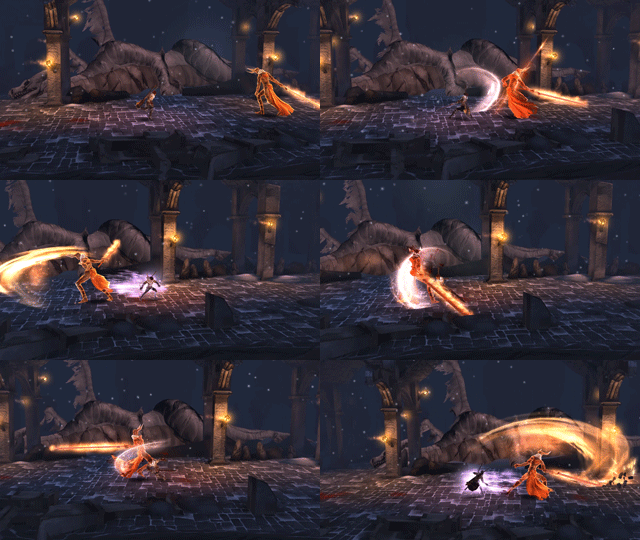
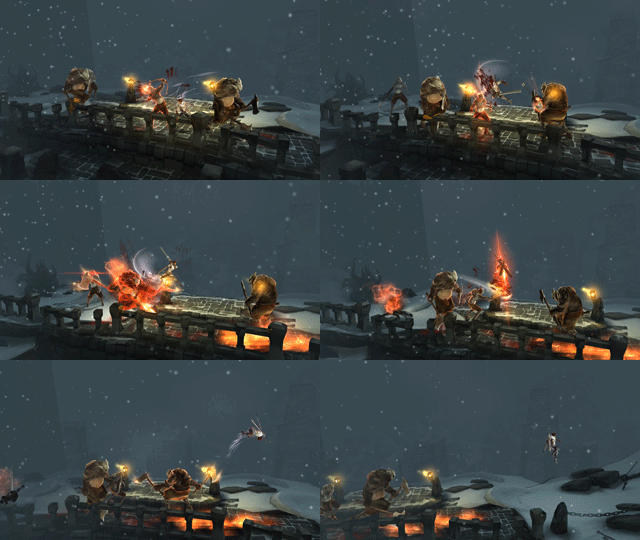
GrimValor allows you to dash across the ground or air left or right, and you can do this infinitely with perhaps a half-second cooldown between. This same action activates your dodge ability. When an enemy is preparing to–or in the middle of–attacking you, you can use your dash button to evade almost any attack.
The game does a good job at giving attack indicators and distinguishing the dash animation from the dodge animation.
The problem is that both the dodge and dash are inconsistent. Especially during boss fights and projectiles, you will see an attack coming, dash to avoid it, and instead end up charging headfirst into the attack because the game doesn’t recognize what you’re trying to do. And frequently, if you’re dealing with many enemies attacking at once, you can enter a stun-locked state, where you will be hit repeatedly without a chance to react or recover.
Certain enemies outpace your dodge mechanic even if you activate it in time, meaning that even if you dodge their first attack successfully, you have a chance of getting hit immediately after because their next attack will hit before you can dodge a second time.
And plenty of times, the game simply does not register your button inputs. I’m sure it isn’t exclusive to the dodge/dash mechanic, but it’s the most annoying with it. Sometimes I was able to dash seven times in the air before landing. Other times, I could only get two dashes in because it didn’t register me hitting the buttons. There isn’t a specific rhythm to the dashing either.
Introducing a parry system would be nice, but if the input issues aren’t solved, it runs the risk of falling into the same problem. Having the dash and dodge be on the same button may be too much for the game to process. At the very least, the game needs to give players more leniency after successfully dodging. If you can’t escape an attack, you should be able to evade it. If not, it needs to have invincibility frames linger after initial dodges.
Greater Dashing
Speaking of the dash mechanic, something the game is sorely lacking is a charged dash mechanic.
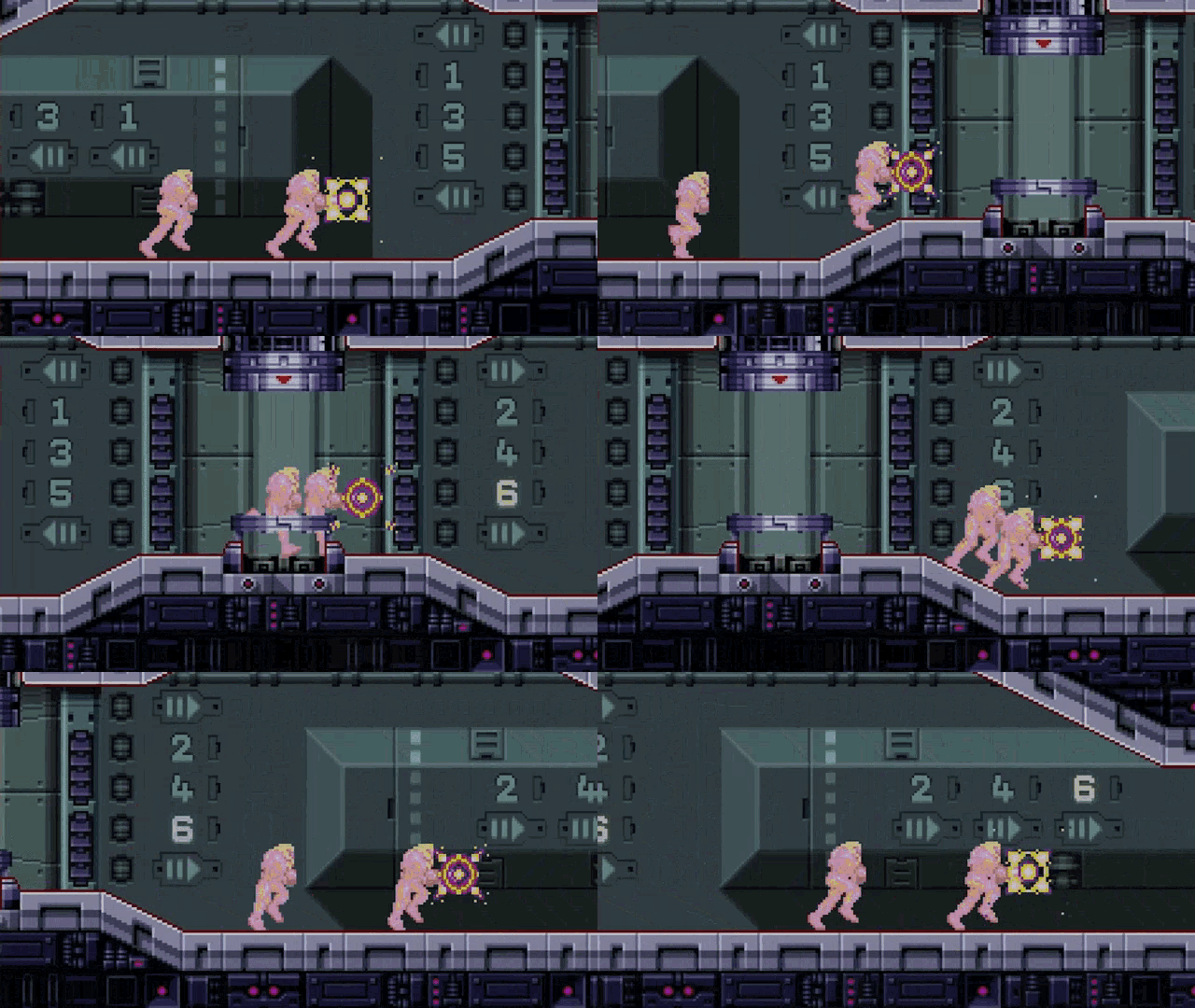
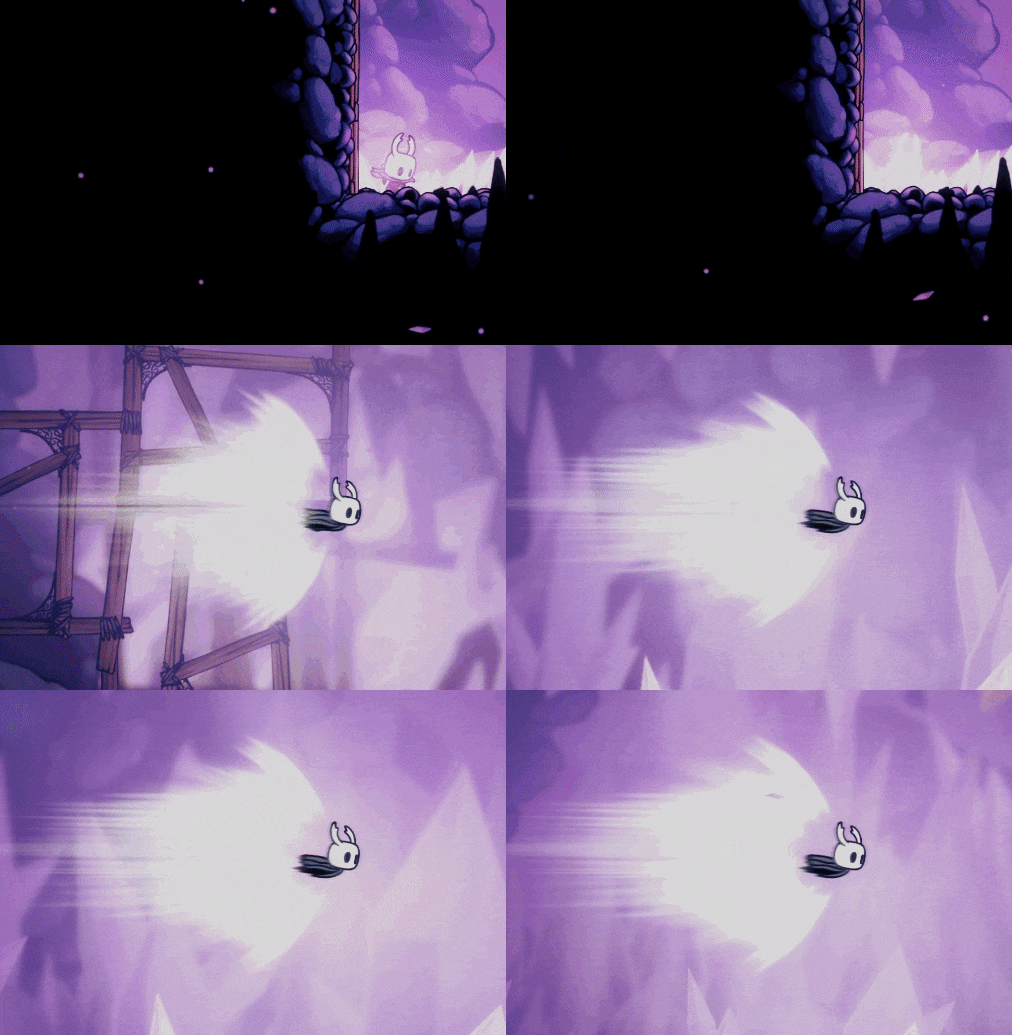
Metroidvanias of young and old give players the ability to speedily travel across larger sections of maps, and good ones understand how to keep that mechanic from subverting gameplay (ergo, eliminating challenge). This mechanic lets the player backtrack and explore after they’ve already investigated what an area has to offer.
This mechanic would help GrimValor significantly. The hub worlds alone can take up to 15 seconds at a time to travel across when the player just needs to get from one end of the room to the other. There are many horizontal stretches of map in GrimValor which either start or become empty save for clusters of enemies. Especially when you return to a boss area, you don’t even have respawning enemies to deal with, making for a boring chunk of segments, particularly for collectors.
GrimValor is already structured in a way where you can’t just fly through all its challenges. Plenty of dips and climbs in terrain still force players to use platforming skills and interact with the environment. And as far as enemies are concerned, you can either have the super-dash mechanic passively damage enemies, damage the player upon touching enemies, or ignore them entirely as you travel. This isn’t a flaw.
Players who ignore enemies aren’t going to pick up experience. So when they encounter unavoidable enemies, they’ll face higher difficulty curves. It’s a simple balance really. And you can balance it even further by tying the dash to the focus meter. Just have the dash only last for as long as you have stored energy.
Grappling System
When going through New Game Plus, I encountered a segment where the only way to get to a hidden ledge–as well as the next mandatory section of the map–was to strike a set of flying enemies. These sections were designed for the teleport-attack mechanic. But I ran into a few problems.
First off, the enemies don’t infinitely respawn in-room. You have to travel in and out of the room, and you have to go halfway across the room before you encounter them again, making for another tedious grind if you fail.
Second, the enemies don’t stay in the spots of the room you need them to be at in order to climb to the needed areas. The enemies would start flying down and rarely flew back up.
Most importantly, however, I had almost no control over which enemies I could attack. The teleport mechanic sends you flying to the nearest enemy in the direction the character is facing. So it’s up to the player to make sure there aren’t any enemies in the way of the one you want to hit. That became an issue when not only were there clusters of these enemies I couldn’t maneuver around to properly aim at, but frequently–because an enemy barely had enough time to move to the other side of my character–the teleport function canceled out, and I just attacked normally.
Keeping the teleport attack to where it goes after the nearest enemy on impulse is fine. But it would make these more complex platforming sections a lot more rewarding if you could select who to grapple onto. Say that you could hold down the teleport mechanic, and then tap a button to change which enemy your targeting system highlights. Not only would you have a clear idea of who you’re going to hit, but you’d be able to account for any off-screen enemies you didn’t know the game might lock you onto.
So… Is That It?
Oh absolutely not. When we come back, I’ll talk about the environment of the game itself (puzzles, level structure, collectibles, etc.), and later on, we’ll get to my favorite aspect: the narrative. So look forward to a sequel to this piece in the near future.
In the meantime, please feel free to check out some of my other video game posts, such as my coverage of Minecraft, Metal Sonic from the Sonic the Hedgehog franchise, or my proof of concept video game Project After-War.
I’d love to hear feedback, be it what you think about GrimValor or ways I can improve my posts as a whole.